I'm a participant in the Amazon Services LLC Associates Program, an affiliate advertising program designed to provide a means for me to earn fees by linking to Amazon.com and affiliated sites.
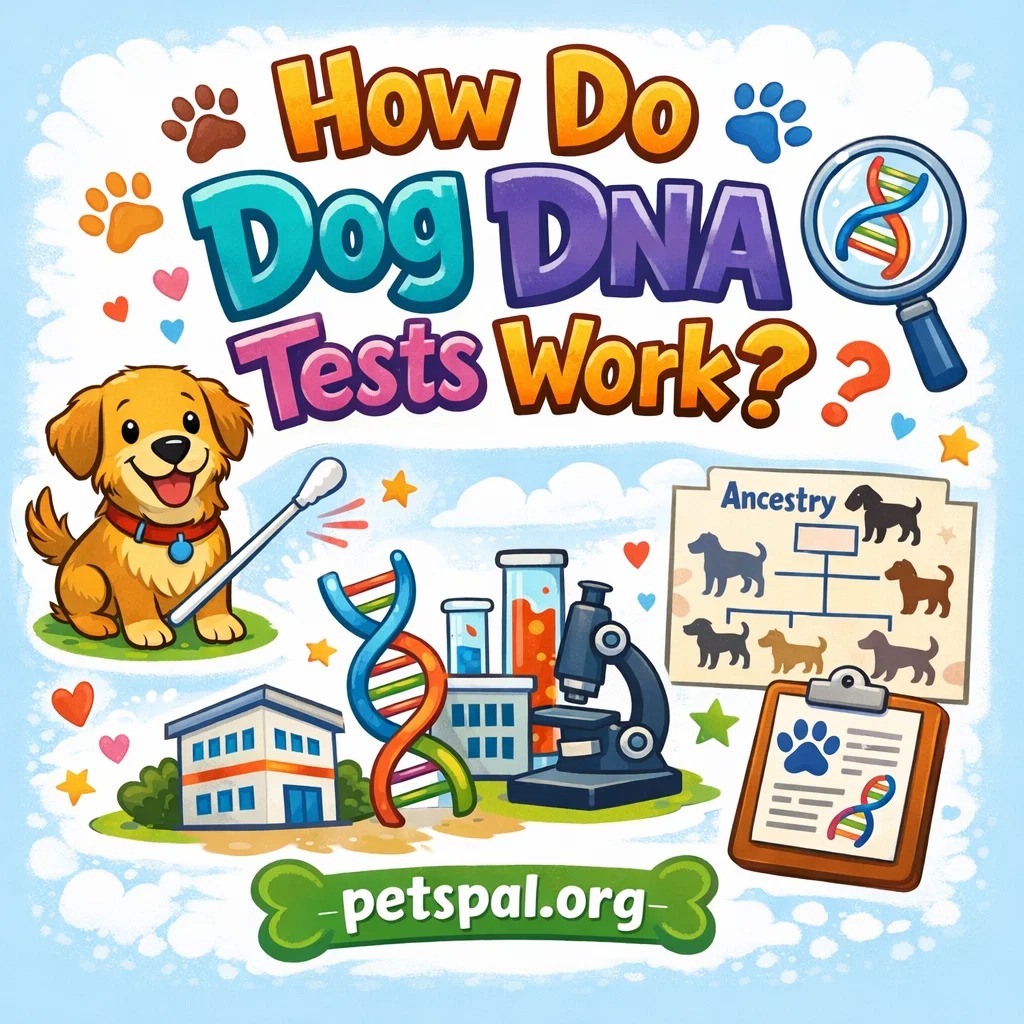
How do dog DNA tests work? Dog DNA tests work by collecting your dog’s cells (usually from a cheek swab), reading thousands to hundreds of thousands of genetic markers, then comparing your dog’s genetic pattern to a reference database to estimate ancestry and related traits.
Why this matters: once you understand the pipeline, you’ll know what results are rock-solid, what results are “best estimates,” and how to avoid the sampling mistakes that quietly wreck accuracy.
Feature | |||||
|---|---|---|---|---|---|
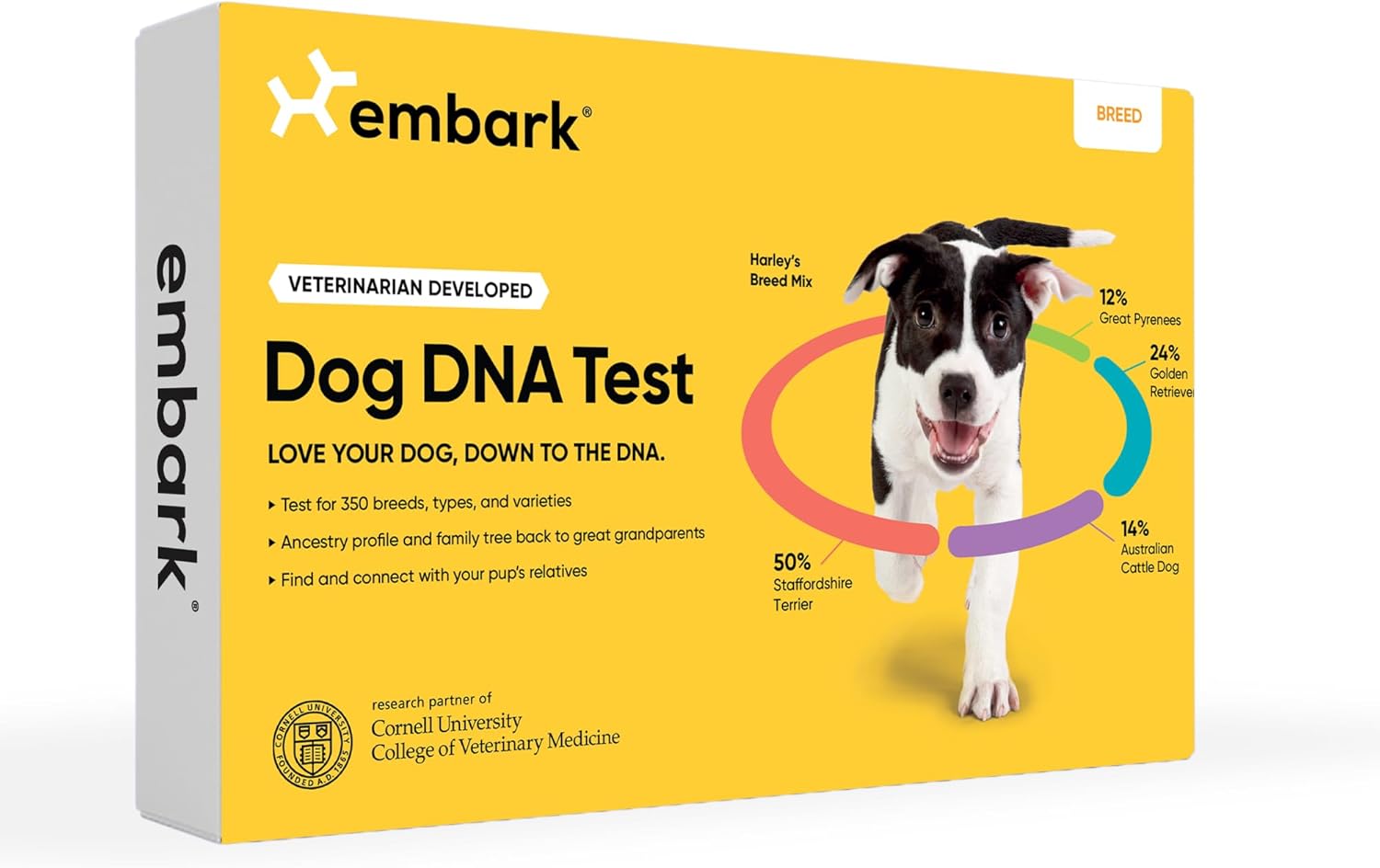 |  | 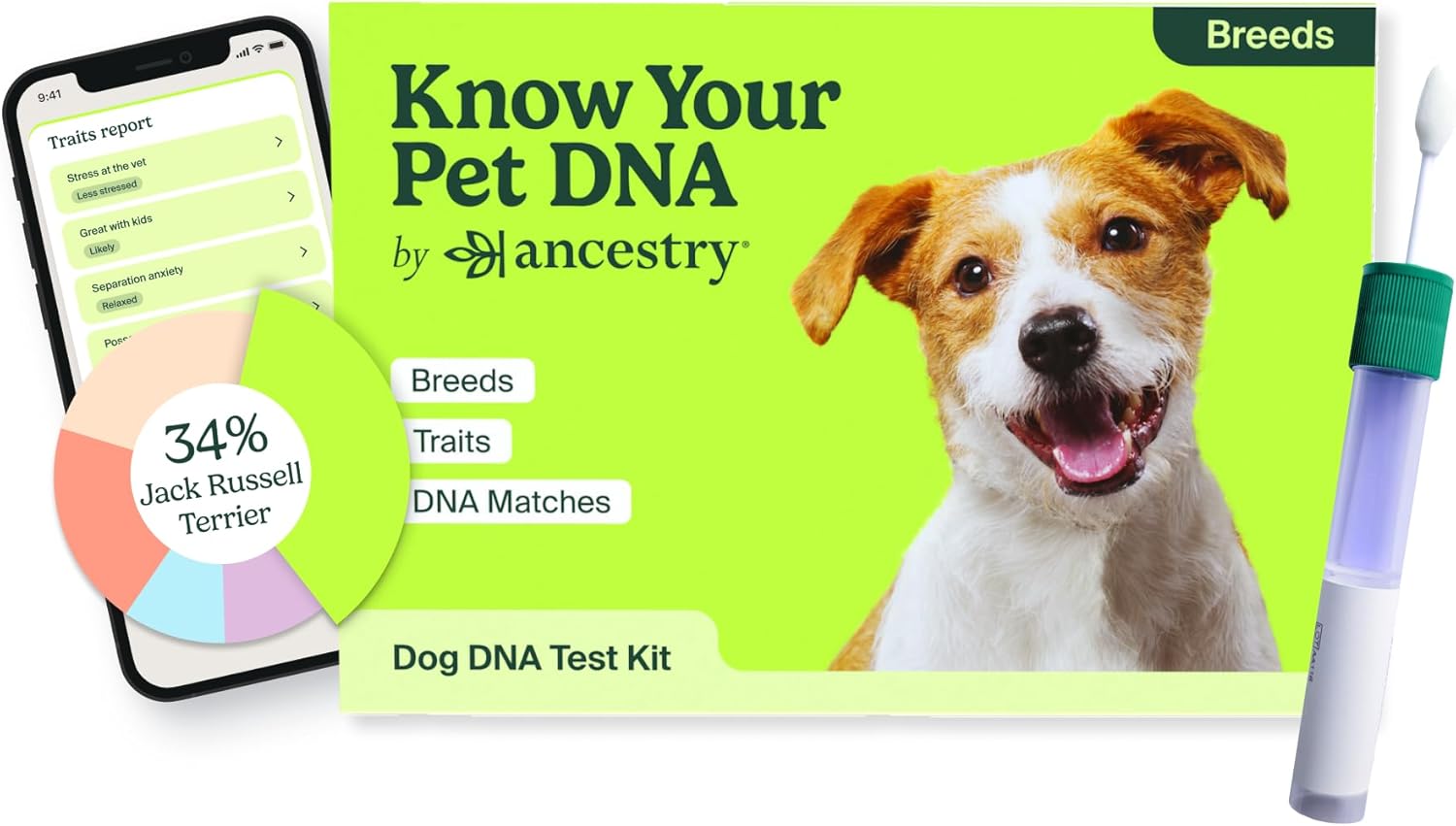 | 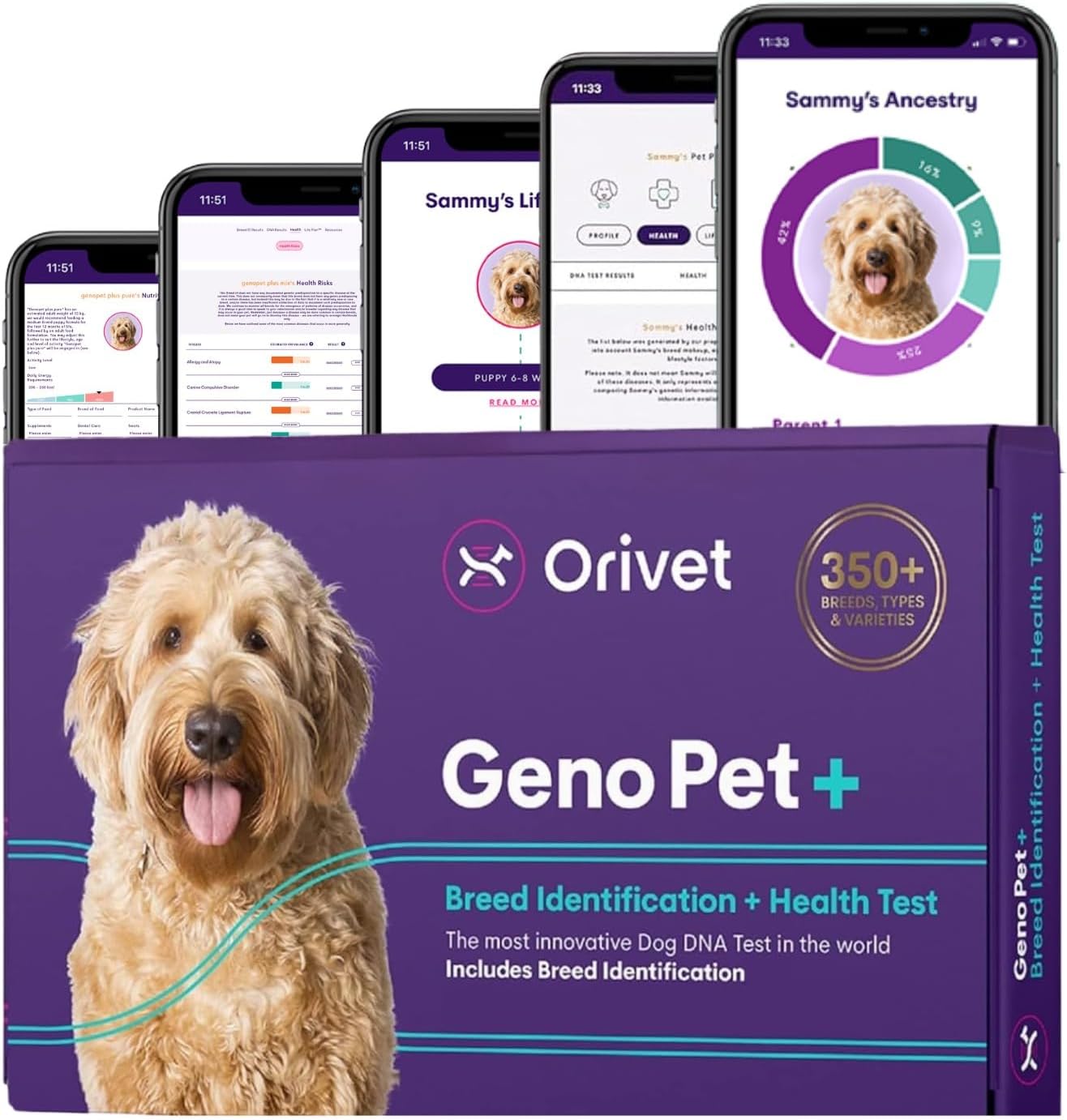 |  | |
Best for | Best overall breed + health | Most detailed all-in-one report | Simplest dashboard experience | Wellness planning style report | Budget-friendly deeper option |
Breed database size | 400+ breeds | 365+ breeds | 400+ breeds | Around 400 breeds | 350+ breeds |
Health screening | 270+ genetic health conditions | 265+ genetic health conditions | 200+ health screenings | Over 200 diseases and traits | “Health concerns” insights (not positioned as a full medical screen) |
Traits and behavior | Traits included | 50+ traits and behavior predispositions | Traits included | Traits and health framing included | Personality traits included |
Relatives matching | Yes | Yes | Matches included | Not the main focus | Not the main focus |
Typical results time | 2–4 weeks | About 3 weeks | 2–4 weeks | Often 2–4 weeks | About 3 weeks (varies by kit) |
Price |  | | | | |
The short version: what happens in 6 stages
- Sample collection (cheek cells on a swab)
- DNA extraction (pull DNA out of those cells)
- Genotyping or sequencing (read many genetic markers)
- Quality control (confirm the data is usable)
- Ancestry inference (compare to a reference panel and estimate breed mix)
- Report generation (breed breakdown, “segments,” traits, sometimes health screens)
Stage 1: Collecting the sample (this is where reliability starts)
Most consumer tests use a buccal swab, meaning a cheek swab. The goal is simple: collect your dog’s cells, not food, not bacteria from a shared bowl, and definitely not another dog’s saliva.
A high-quality swab looks like this:
- Your dog has had no food or water for at least 1 hour (follow the lab’s directions).
- You swab firmly along the inner cheek and gumline for the full time required.
- In multi-dog homes, you wash hands between dogs to prevent mix-ups.
Puppies need extra care: isolate them from mom, littermates, and shared toys for the hour before swabbing, and avoid nursing in that window.
Best dog DNA test kit quick picks
- Best overall: Embark Breed + Health
- Best “everything in one report” alternative: Wisdom Panel Premium
- Best for a big-brand, easy dashboard experience: Know Your Pet DNA by Ancestry
- Best for wellness planning style reporting: Orivet GenoPet Plus
- Best budget-friendly option: DNA My Dog Essential (or Premium if you want deeper extras)
Stage 2: DNA extraction (turning cheek cells into testable DNA)
Once the lab receives your sample, they:
- break open the cells
- isolate and clean the DNA
- measure whether there is enough DNA, and whether it’s intact
If the DNA is too low-quality or contaminated, some labs will request a resample. That is not a scam moment, it’s quality control doing its job.
Stage 3: Genotyping vs sequencing (how the test “reads” your dog)
Most dog DNA tests use genotyping with SNP microarrays
The most common approach is SNP genotyping using microarray-based profiling, which checks thousands of specific “spelling difference” spots in the genome called SNPs (single-nucleotide polymorphisms).
A microarray is essentially a chip with lots of DNA “probes.” Your dog’s DNA binds to matching probes, then a scanner reads signals that indicate which genetic variants are present.
To make this concrete: some widely used canine SNP arrays measure tens of thousands of SNPs across the dog genome (and research-grade arrays can measure far more).
Sequencing is different
Sequencing reads much more of the DNA directly (sometimes the whole genome). It can be powerful, but it is typically more data-heavy and often not necessary for basic breed ancestry.
The key point: genotyping is like checking a large set of known landmarks, while sequencing is like mapping every street.
Feature | |||||
|---|---|---|---|---|---|
| | | | | |
Best for | Best overall breed + health | Most detailed all-in-one report | Simplest dashboard experience | Wellness planning style report | Budget-friendly deeper option |
Breed database size | 400+ breeds | 365+ breeds | 400+ breeds | Around 400 breeds | 350+ breeds |
Health screening | 270+ genetic health conditions | 265+ genetic health conditions | 200+ health screenings | Over 200 diseases and traits | “Health concerns” insights (not positioned as a full medical screen) |
Traits and behavior | Traits included | 50+ traits and behavior predispositions | Traits included | Traits and health framing included | Personality traits included |
Relatives matching | Yes | Yes | Matches included | Not the main focus | Not the main focus |
Typical results time | 2–4 weeks | About 3 weeks | 2–4 weeks | Often 2–4 weeks | About 3 weeks (varies by kit) |
Price | | | | | |
Stage 4: Quality control (the “do we trust this data?” checkpoint)
Before any ancestry math happens, labs run checks such as:
- missing data rates (too many unread markers is a red flag)
- internal consistency (does the pattern look biologically plausible?)
- contamination signals (mixed samples can look weird)
This general “DNA prep → assay → QC” workflow is standard in genotyping pipelines.
Stage 5: How breed ancestry is inferred (this is the “magic,” and it is math)
Your dog’s DNA is compared to a reference panel
Ancestry inference depends heavily on the reference database: dogs of known breeds (or known breed clusters) used as comparison points.
Researchers commonly infer ancestry with supervised “admixture” approaches, where the algorithm estimates what proportion of your dog’s genome resembles each reference breed group. A well-cited dog genomics study describes using supervised ADMIXTURE with a reference panel and discarding very tiny weights (for example, under 1%) in some analyses.
Global ancestry vs local ancestry
Many modern approaches think in two layers:
- Global ancestry: overall breed mix across the whole genome
- Local ancestry: which breed “matches” specific genome segments
This is why you may see a timeline, chromosome view, or “segments” style breakdown in some reports.
Why “1–2% breeds” are tricky
The smaller the percentage, the more it can be influenced by:
- limited representation of certain breeds in the reference panel
- closely related breeds that blur together genetically
- the company’s reporting thresholds
A large Dog Aging Project cohort found that when owners reported disagreement with genetic results, a common reason was that the dog’s breed was not included in the reference panel.
Stage 6: Turning genetics into a report (what gets added after breed)
Breed identification is usually the headline, but many tests also compute:
- traits (coat type, color-related markers, body size clues)
- health variants (often single-gene markers that are well-studied)
A veterinary journal review notes that many direct-to-consumer canine tests use SNP microarrays and can identify breed ancestry and other genetic findings, which is why vets increasingly get asked to interpret results.
Important nuance: single-gene health variants are not the same as diagnosing disease today. They can flag risk or carrier status, but they are not a clinical exam.
What makes dog DNA tests more accurate (and what makes them less reliable)
More reliable when:
- you collected a clean, high-cell swab sample
- the reference panel includes the relevant breeds and enough dogs per breed
- results are interpreted by focusing on top contributors, not the “trace” tail
Less reliable when:
- sample quality is poor or contaminated (multi-dog homes, recent eating)
- your dog’s ancestry includes rare, village, regional, or underrepresented lineages
- you treat tiny percentages as exact facts rather than best estimates
A simple way to read results without getting misled
Use this “confidence ladder” as a sanity check:
- 25%+: strong contributor, usually meaningful
- 10–25%: meaningful contributor
- 5–10%: plausible clue
- 1–5%: treat as “interesting,” not identity-defining
- Under 1%: often not shown, or not worth acting on
This matches how many ancestry pipelines handle tiny weights and why reference panels matter.
FAQs: How dog DNA tests work
Do dog DNA tests actually read my dog’s whole genome?
Usually no. Most consumer tests use genotyping, which reads many specific markers (SNPs), not every letter of DNA.
Why do two tests sometimes give different breed results?
Different companies can use different reference panels, different algorithms, and different reporting thresholds. Missing breeds in a reference panel is a known reason for disagreement.
What is a SNP, in normal language?
A SNP is a one-letter difference in DNA that varies across individuals. Microarray-based genotyping checks lots of these differences at once.
What does “segments” or “chromosome painting” mean?
It usually refers to local ancestry, where the algorithm estimates which breed group best matches different genome regions.
Can a cheek swab really contain enough DNA?
Yes, if collected correctly. Following professional sample-collection guidance (like avoiding food and preventing cross-contamination) improves results.
Are dog DNA tests the same as medical tests?
They can include health-related genetic markers, but they are not a diagnosis. Think of them as risk and carrier screens that may guide a vet conversation.
Other Interesting Articles
- Best Dog DNA Test Kit: Embark vs Wisdom Panel vs Ancestry and More
- Wisdom Panel vs Ancestry: Which Dog DNA Test Should You Buy?
- Wisdom Panel vs DNA My Dog: Which Dog DNA Test Should You Buy?
- Wisdom Panel vs Basepaws: Which Cat DNA Test Should You Buy?
- Wisdom Panel vs Embark: Which Dog DNA Test Should You Buy?
About the Author
PetsPal helps pet parents make smarter decisions with practical guides, clear comparisons, and real-world advice that keeps your dog’s wellbeing first. We help pet owners answer common questions such as “How Do Dog DNA Tests Work?” and many others.
References
- NHGRI: DNA microarray technology and what microarrays detect.
- JAVMA (2024): overview of direct-to-consumer canine genetic tests and common microarray-based genotyping.
- Science (2022) / open-access version: supervised admixture with reference panels for breed-calling.
- Scientific Reports (2025, Dog Aging Project): high concordance overall, and how missing reference breeds drive disagreements.
- UC Davis Veterinary Genetics Laboratory: dog cheek-swab collection practices that prevent contamination.
- Illumina canine SNP array datasheet and microarray marker scale examples.