I'm a participant in the Amazon Services LLC Associates Program, an affiliate advertising program designed to provide a means for me to earn fees by linking to Amazon.com and affiliated sites.
If you’re searching which DNA test for dogs is most accurate, the best answer is this:
The most accurate dog DNA tests are the ones that (1) use high-quality genotyping data, (2) compare your dog to a large, well-curated breed reference panel, (3) show clear confidence or quality controls, and (4) have evidence their results are driven by genetics, not by photos or marketing.
Why this matters: two tests can use the same cheek swab and still disagree. Not because your dog changed, but because accuracy depends on what happens after the swab: the lab method, the database, and the algorithm.
Feature | |||||
|---|---|---|---|---|---|
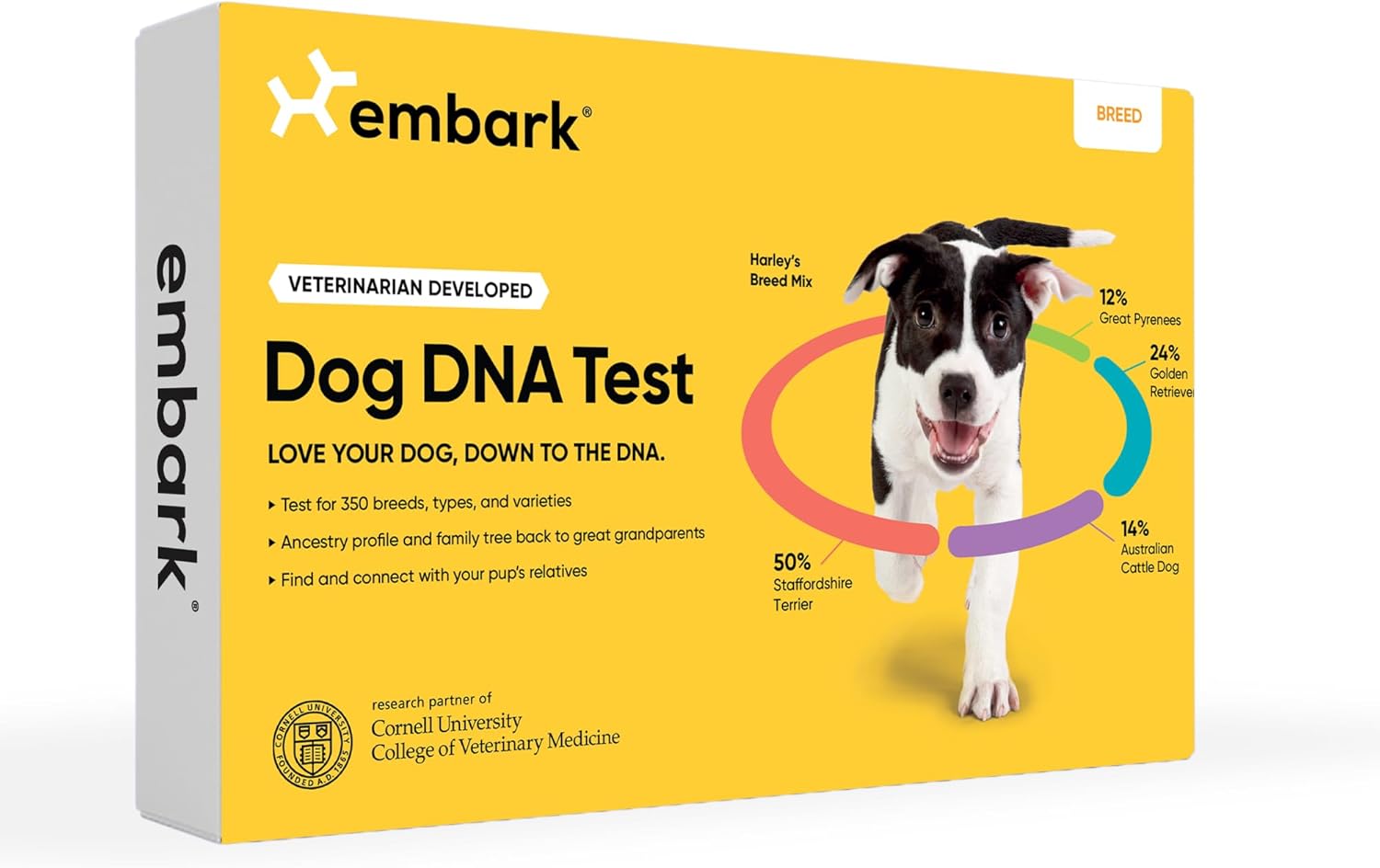 |  | 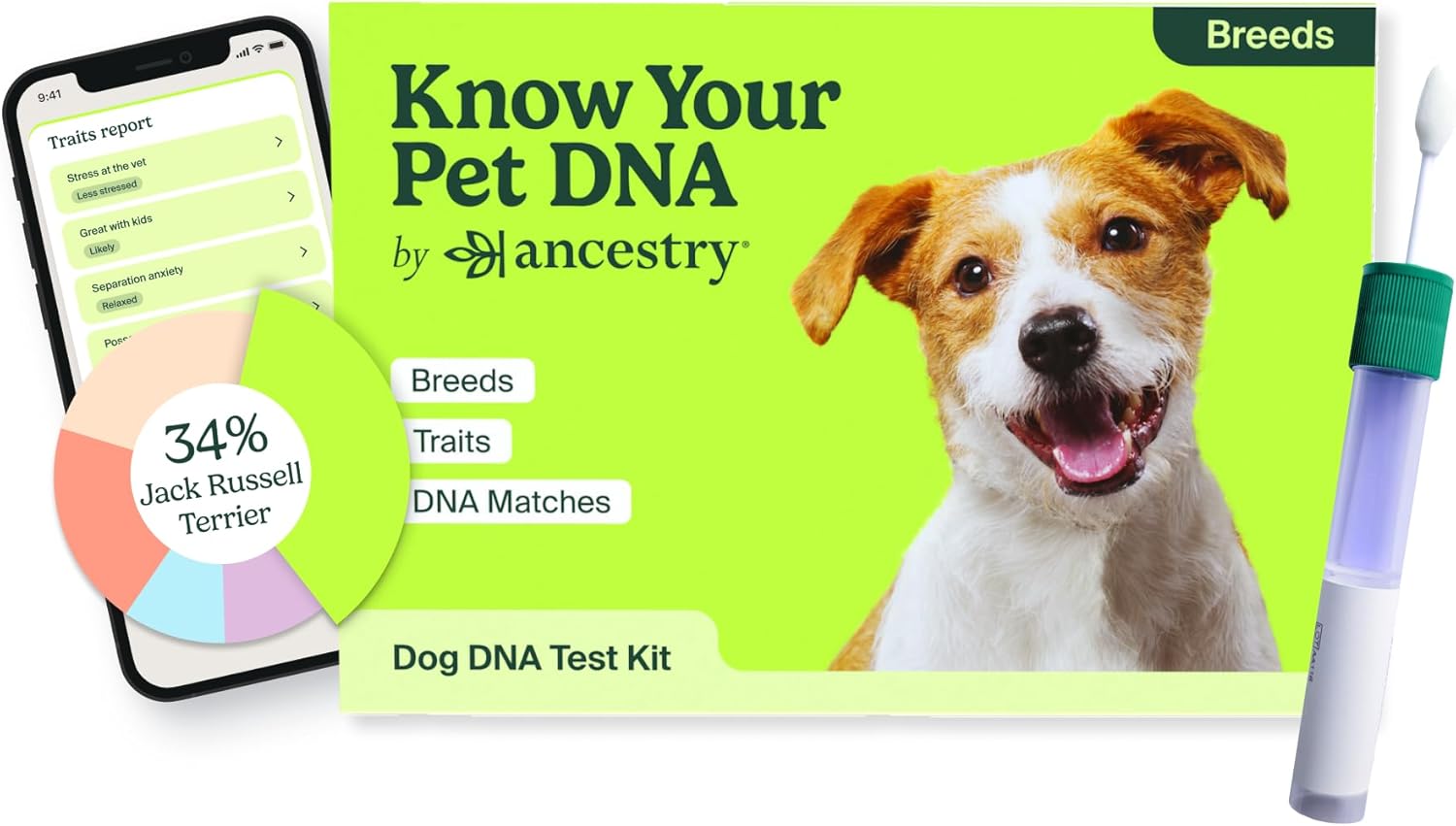 | 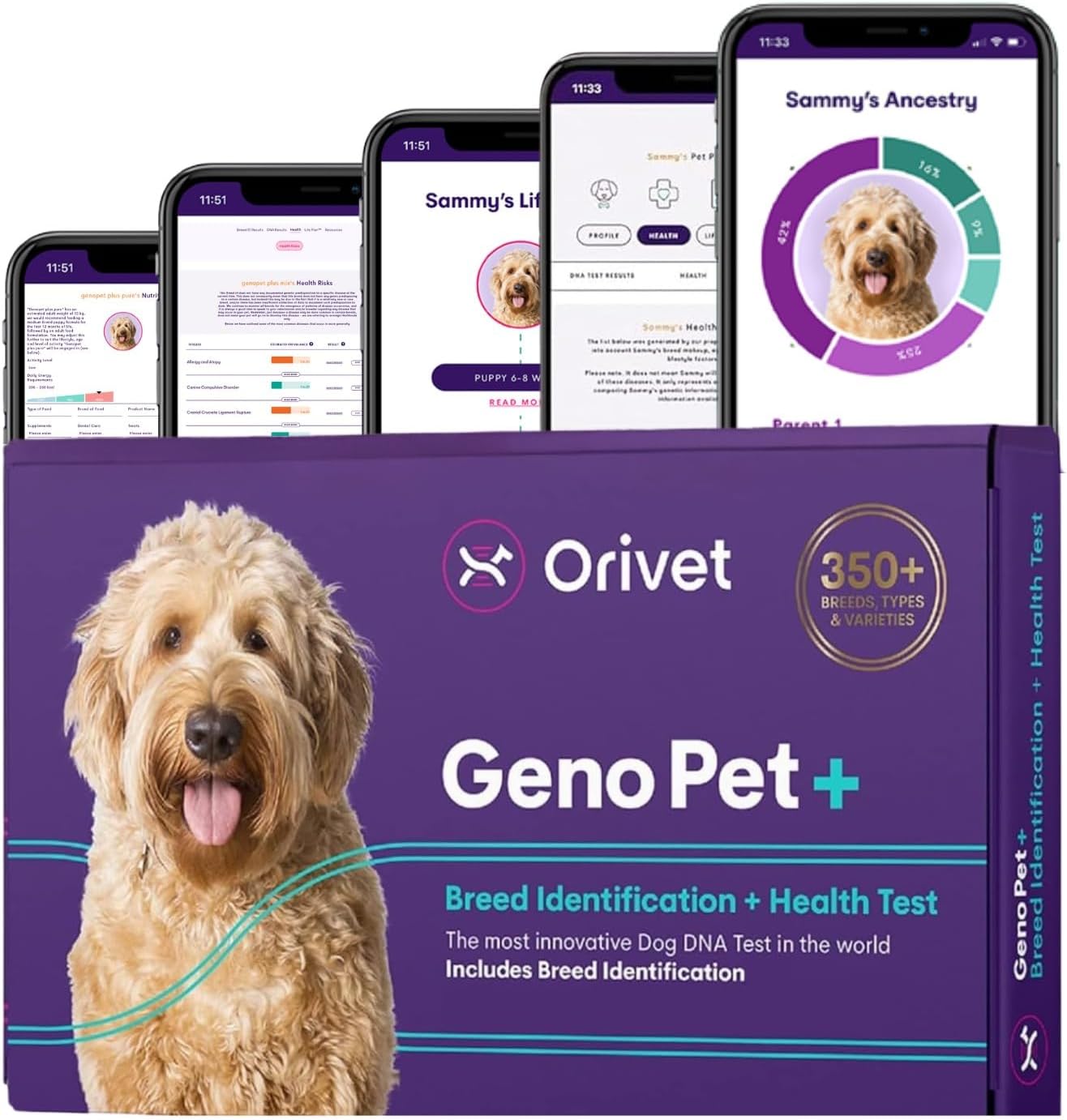 |  | |
Best for | Best overall breed + health | Most detailed all-in-one report | Simplest dashboard experience | Wellness planning style report | Budget-friendly deeper option |
Breed database size | 400+ breeds | 365+ breeds | 400+ breeds | Around 400 breeds | 350+ breeds |
Health screening | 270+ genetic health conditions | 265+ genetic health conditions | 200+ health screenings | Over 200 diseases and traits | “Health concerns” insights (not positioned as a full medical screen) |
Traits and behavior | Traits included | 50+ traits and behavior predispositions | Traits included | Traits and health framing included | Personality traits included |
Relatives matching | Yes | Yes | Matches included | Not the main focus | Not the main focus |
Typical results time | 2–4 weeks | About 3 weeks | 2–4 weeks | Often 2–4 weeks | About 3 weeks (varies by kit) |
Price |  | | | | |
First, define “accurate” (most articles skip this)
When people say “accurate dog DNA test,” they usually mean one of these:
Breed ancestry accuracy
“How close is the breed breakdown to my dog’s true genetic ancestry?”
This depends heavily on the reference panel and ancestry model.
Lab accuracy
“Did the lab correctly read my dog’s DNA markers?”
Most reputable labs do fine here if the sample quality is good, but bad swabs can fail QC or lead to weaker calls.
Trait and health marker accuracy
“Are specific genetic variants correctly detected?”
Single-variant results tend to be more straightforward than “breed percentages,” but interpretation still matters.
Behavior prediction accuracy
This is where accuracy drops off a cliff.
A 2025 PNAS study found no evidence that commonly marketed variants meaningfully predict dog behavior. So if a test is selling “personality DNA,” treat that as entertainment, not truth.
Best dog DNA test kit quick picks
- Best overall: Embark Breed + Health
- Best “everything in one report” alternative: Wisdom Panel Premium
- Best for a big-brand, easy dashboard experience: Know Your Pet DNA by Ancestry
- Best for wellness planning style reporting: Orivet GenoPet Plus
- Best budget-friendly option: DNA My Dog Essential (or Premium if you want deeper extras)
What the research suggests (in plain English)
Many consumer-style tests can identify purebred dogs, but results vary
A peer-reviewed JAVMA study tested multiple direct-to-consumer genetic tests using registered purebred dogs and found many could identify the breed. It also highlights that most such tests use SNP genotyping, often via microarray-based profiling.
Some results can be influenced by a photo, which is a major accuracy red flag
Researchers have raised concerns that at least some services’ breed predictions may be influenced by user-submitted photos. If a company asks for a photo, accuracy should be questioned until they show strong evidence it does not affect the results.
Owner beliefs often match genetic results, but missing breeds in databases matter
A large Dog Aging Project cohort found high owner-perceived concordance with genetic breed reports, and a common reason for disagreement was that the dog’s breed was not included in the reference panel. That’s not “your dog is weird.” That’s “the database is incomplete.”
Visual guessing is not a reliable alternative
Studies comparing visual breed identification to DNA results show people often struggle, especially beyond one predominant breed.
Feature | |||||
|---|---|---|---|---|---|
| | | | | |
Best for | Best overall breed + health | Most detailed all-in-one report | Simplest dashboard experience | Wellness planning style report | Budget-friendly deeper option |
Breed database size | 400+ breeds | 365+ breeds | 400+ breeds | Around 400 breeds | 350+ breeds |
Health screening | 270+ genetic health conditions | 265+ genetic health conditions | 200+ health screenings | Over 200 diseases and traits | “Health concerns” insights (not positioned as a full medical screen) |
Traits and behavior | Traits included | 50+ traits and behavior predispositions | Traits included | Traits and health framing included | Personality traits included |
Relatives matching | Yes | Yes | Matches included | Not the main focus | Not the main focus |
Typical results time | 2–4 weeks | About 3 weeks | 2–4 weeks | Often 2–4 weeks | About 3 weeks (varies by kit) |
Price | | | | | |
The Accuracy Scorecard: 10 questions that reveal the most accurate tests
Use this checklist on any dog DNA service. You do not need a genetics degree. You just need answers.
A. The data and lab process
- Do they explain what genotyping method they use (SNP microarray or similar)?
Most reputable DTC tests use SNP microarray-based profiling. If they won’t say, that’s a problem. - Do they have strong quality control, and do they mention resampling when needed?
Legit labs do QC. Weak data should trigger a resample, not a confident-looking report. - Do they give a sample collection protocol that reduces contamination risk?
“Don’t feed or water for at least 1 hour” is a common standard in veterinary genetics guidance, and it matters for clean DNA.
B. The breed database (the biggest driver of ancestry accuracy)
- Do they state how many breeds are in their reference panel?
More coverage usually improves mixed-breed calls. - Do they explain what happens if a breed is not in the panel?
The Dog Aging Project findings show missing breeds are a real source of disagreement. - Do they show confidence levels or probability ranges?
A list of 20 tiny percentages with no confidence info is not “more accurate.” It is often just “more numbers.”
C. The ancestry model (how they turn DNA into breed percentages)
- Do they describe their ancestry approach at a high level?
Scientific breed-calling pipelines commonly use supervised ancestry inference with a reference panel (think “compare your dog’s marker pattern to known populations”). - Do they update results when the reference panel grows?
Breed calling can improve as databases expand. A static system tends to age poorly.
D. The honesty test (this separates “accurate” from “confident-sounding”)
- Do they warn that behavior prediction is not validated?
If they promise to predict temperament from a handful of variants, they are ignoring what current evidence shows. - Do they require a photo, or heavily encourage one?
Photo-driven influence has been raised as a concern in research reporting. A “most accurate” test should stand on genetics alone.
The “most accurate” choice depends on what you need
If you only care about breed ID
Accuracy is mostly about:
- reference panel breadth
- confidence reporting
- transparent method
If you care about a specific inherited condition
A targeted veterinary genetics lab test can be the most accurate route for that single question, especially when the goal is clinical decision-making.
If you care about behavior or personality
No current option deserves “most accurate” here. The science does not support strong predictions from small variant sets.
How to make any test more accurate (yes, you can influence this)
Step 1: Collect a clean sample
Do this every time:
- No food or water for at least 1 hour
- Wash hands, isolate dogs if sampling multiple
- For puppies, isolate from mom and littermates beforehand
Step 2: Interpret results like a pro
- Trust the top contributors more than tiny “trace” percentages.
- Expect close-related breeds to blur together.
- If your dog’s background includes rare or region-specific populations, missing reference breeds can distort the output.
Step 3: Validate if accuracy truly matters
If you need high confidence (housing, insurance, or medical decisions):
- compare results to pedigree documentation if available
- consider targeted confirmatory testing for specific medical concerns with your vet
Red flags that should make you walk away
- Requires or heavily weights a photo for breed calling
- Promises to predict personality or behavior as a core feature
- No explanation of reference panel size or method
- No quality-control language, no mention of resampling
- Results look overly precise without confidence metrics (“0.3% of X breed” with no uncertainty)
FAQs: Which DNA test for dogs is most accurate?
Which dog DNA test is most accurate for mixed breeds?
The most accurate option is usually the one with the largest, best-curated reference panel and clear confidence reporting, because mixed breeds stress the database more than purebreds.
Are dog DNA tests accurate for purebred dogs?
Many direct-to-consumer tests can identify registered purebred dogs, though performance varies by service and methodology.
Why do two DNA tests give different breed results for the same dog?
Common reasons include differences in reference panels, breed coverage, ancestry algorithms, and how they report uncertainty. Missing breeds in a reference panel is a documented cause of disagreement.
Can a dog DNA test be influenced by a photo?
Research and reporting have raised concerns that some services may be influenced by user-submitted photos. A truly accuracy-focused test should not need a photo to call breed ancestry.
Are dog DNA tests more accurate than guessing by looks?
Yes. Studies show visual breed identification is often unreliable, especially for multi-breed mixes.
Can dog DNA tests accurately predict behavior?
Current evidence does not support strong behavior prediction from commonly marketed genetic variants. Treat behavioral “DNA insights” as low-reliability.
Other Interesting Articles
- Best Dog DNA Test Kit: Embark vs Wisdom Panel vs Ancestry and More
- Wisdom Panel vs Ancestry: Which Dog DNA Test Should You Buy?
- Wisdom Panel vs DNA My Dog: Which Dog DNA Test Should You Buy?
- Wisdom Panel vs Basepaws: Which Cat DNA Test Should You Buy?
- Wisdom Panel vs Embark: Which Dog DNA Test Should You Buy?
About the Author
PetsPal helps pet parents make smarter decisions with practical guides, clear comparisons, and real-world advice that keeps your dog’s wellbeing first. From “Which DNA Test for Dogs Is Most Accurate?” to other common questions for dog and cat owners, we help pet owners of all types better care for their furry friends.
References
- Microarray-based SNP profiling is commonly used in direct-to-consumer canine genetic tests (peer-reviewed veterinary source).
- Large-cohort concordance and the impact of missing breeds in reference panels (Dog Aging Project, Scientific Reports).
- Concerns about photo influence in breed ancestry predictions (research reporting and veterinary literature).
- Visual breed identification accuracy limitations compared to genetic testing.
- Evidence that marketed behavior variants do not reliably predict dog behavior (PNAS and PubMed summaries).
- Veterinary genetics sample collection guidance to reduce contamination and improve sample quality.