I'm a participant in the Amazon Services LLC Associates Program, an affiliate advertising program designed to provide a means for me to earn fees by linking to Amazon.com and affiliated sites.
Dog DNA tests for breed identification can be genuinely useful, especially for mixed-breed dogs, rescues, and “mystery pups” with unclear backgrounds. The best way to think about them is this: they are excellent at detecting genetic patterns, but the story you get depends on the lab’s reference database, the math behind the match, and how you interpret small percentages.
Why this matters: breed labels can influence training expectations, housing, insurance, and even how strangers react to your dog. Getting it right (and reading it responsibly) can protect your dog and help you make better choices.
Quick reality check (read this before you buy or swab)
- Big chunks are the signal. The top 1–3 breeds usually tell the most meaningful story.
- Tiny percentages are “possible,” not “proven.” Treat them as clues, not facts.
- Two tests can disagree without either being “a scam.” Different reference panels and algorithms can change the label.
Feature | |||||
|---|---|---|---|---|---|
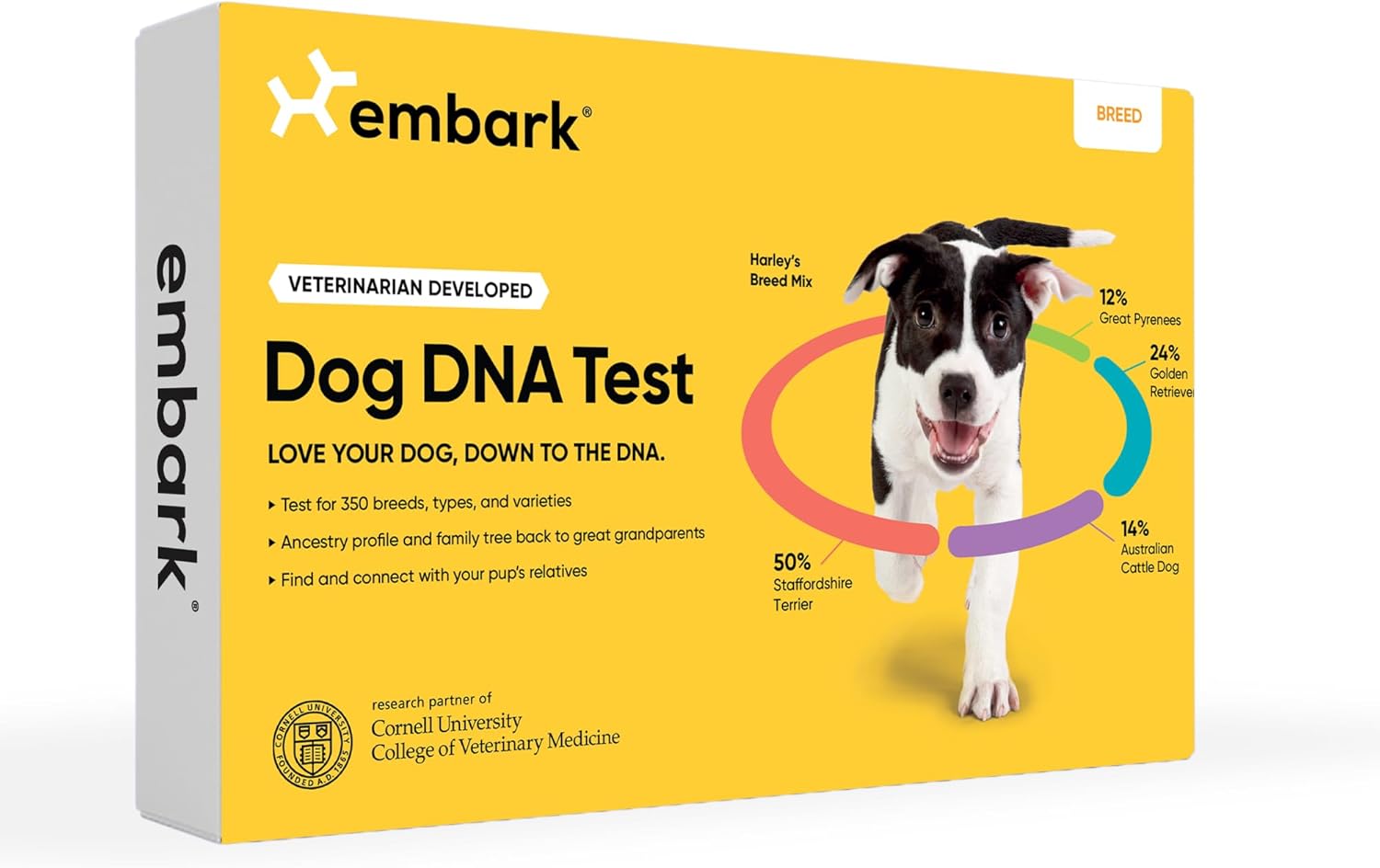 |  | 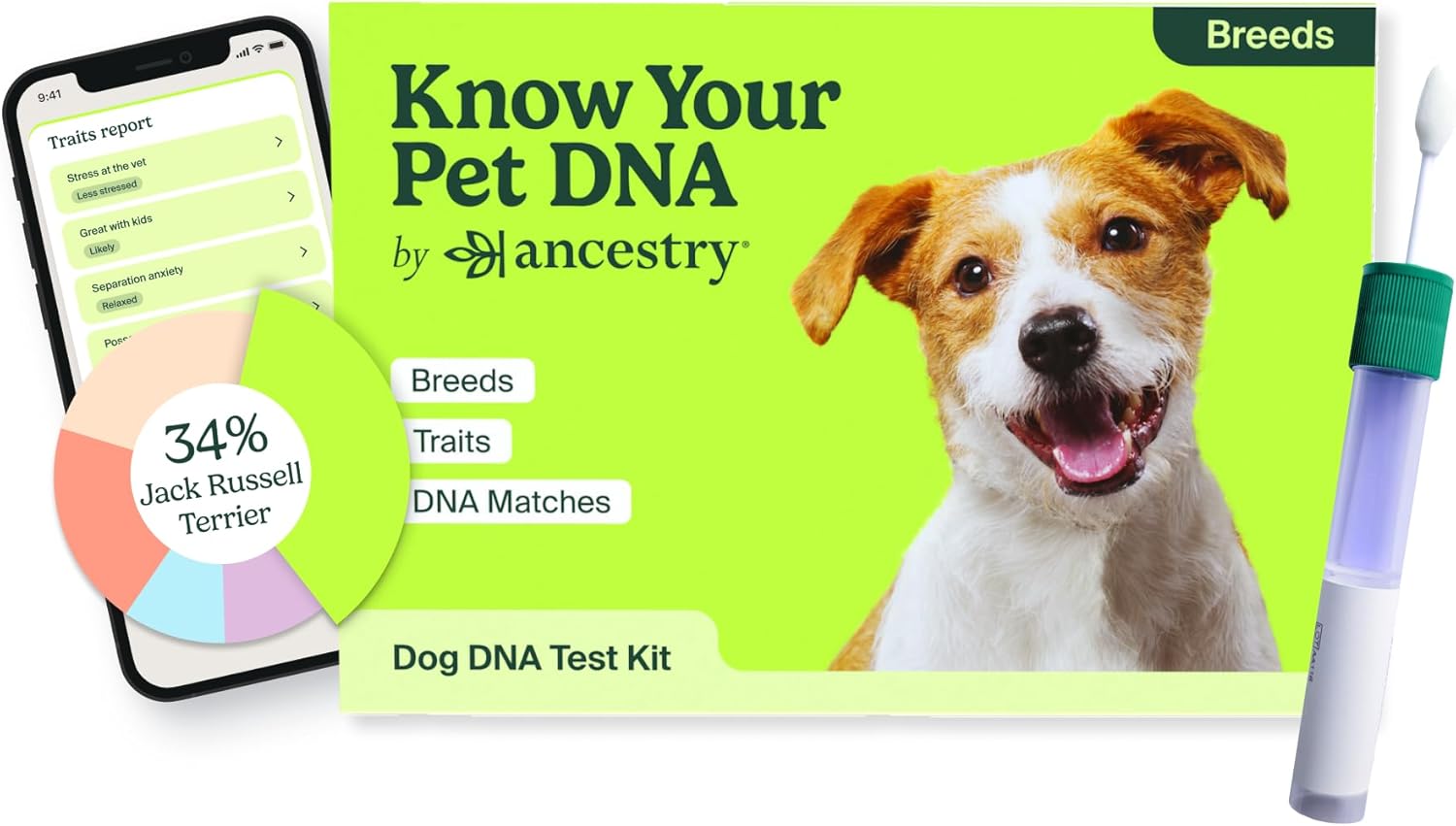 | 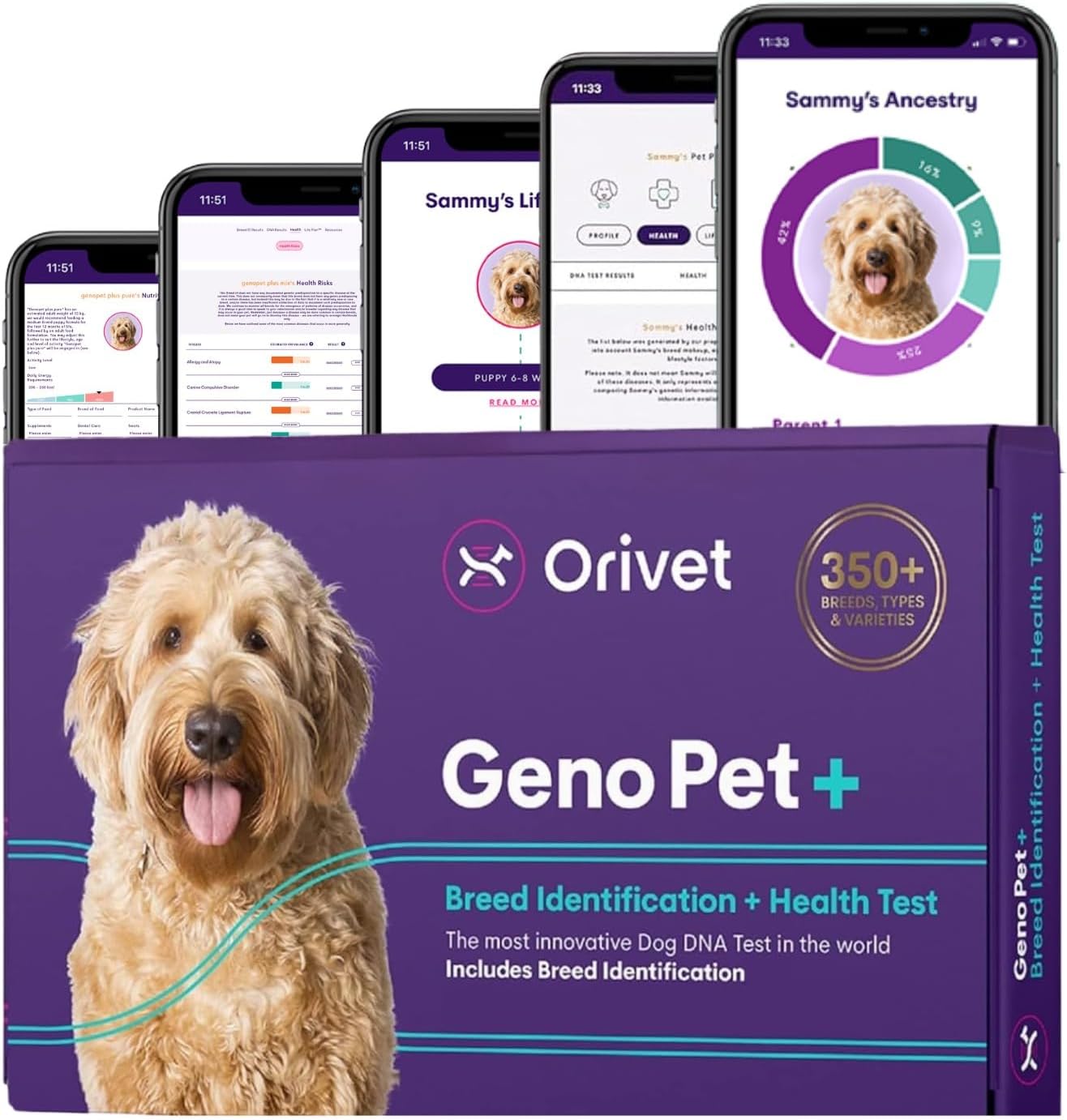 |  | |
Best for | Best overall breed + health | Most detailed all-in-one report | Simplest dashboard experience | Wellness planning style report | Budget-friendly deeper option |
Breed database size | 400+ breeds | 365+ breeds | 400+ breeds | Around 400 breeds | 350+ breeds |
Health screening | 270+ genetic health conditions | 265+ genetic health conditions | 200+ health screenings | Over 200 diseases and traits | “Health concerns” insights (not positioned as a full medical screen) |
Traits and behavior | Traits included | 50+ traits and behavior predispositions | Traits included | Traits and health framing included | Personality traits included |
Relatives matching | Yes | Yes | Matches included | Not the main focus | Not the main focus |
Typical results time | 2–4 weeks | About 3 weeks | 2–4 weeks | Often 2–4 weeks | About 3 weeks (varies by kit) |
Price |  | | | | |
How breed ID dog DNA tests work (plain English, no fluff)
Most consumer breed ID tests use a lab method that reads lots of genetic markers across the genome, often via microarray genotyping. In simple terms: your dog’s DNA binds to a chip with thousands of known DNA fragments, and the machine detects signals that reveal which variants your dog has.
Then the company compares your dog’s marker pattern to a reference panel (a database of dogs with known ancestry). If the reference panel is strong for a breed, it can often detect that ancestry clearly. If a breed is missing or underrepresented, the system will “best-guess” the closest genetic relatives.
The biggest thing most articles forget to explain
Breed ID is not “one match.” It is usually a set of matches across many genome segments. That’s why mixed-breed dogs can show multiple breeds, and why small percentages show up at all.
What breed identification can tell you (and what it cannot)
What it’s good at
- Confirming obvious ancestry (example: you suspect a herding breed influence and the top result supports it).
- Explaining “surprise traits” like size, coat type, or body shape when your dog looks like one thing but behaves or builds like another.
- Replacing weak guesses from appearance alone. Visual breed guessing is notoriously unreliable, even among people who work with dogs.
What it’s not good at
- Proving temperament or “personality.” Large-scale research finds that genetic variants marketed for behavior prediction often do not actually predict behavior well at the individual-dog level.
- Settling arguments about “what breed they look like.” Your dog can look like Breed A and still be genetically closer to Breed B.
- Making legal or policy decisions. Breed labels can be socially powerful, but biology and policy do not always line up cleanly.
Best dog DNA test kit quick picks
- Best overall: Embark Breed + Health
- Best “everything in one report” alternative: Wisdom Panel Premium
- Best for a big-brand, easy dashboard experience: Know Your Pet DNA by Ancestry
- Best for wellness planning style reporting: Orivet GenoPet Plus
- Best budget-friendly option: DNA My Dog Essential (or Premium if you want deeper extras)
The 7 most common reasons your results feel “wrong”
1) The reference database does not include a key breed
If the breed is not in the company’s reference panel, the algorithm will often call a close cousin breed instead. A large Dog Aging Project cohort found that disagreement often comes from breeds not included in the reference panel and from owners applying stricter “match” definitions.
2) Closely related breeds blur together
Some breeds are genetically close enough that the system may swap one for another or split ancestry between them. This is especially common when the “real” ancestor is a closely related regional line.
3) Your dog is more mixed than you think
In large mixed-breed cohorts, dogs often have multiple breed contributions, not just two. If you expected a clean 50/50, you may get something that looks messy but is actually realistic.
4) Small percentages are noisy
A 1–5% label can be:
- a real distant ancestor,
- a statistical “best fit” for a segment,
- or a sign the test is approximating a missing breed with a similar one.
5) Sampling mistakes (yes, it happens)
Swabbing too gently, swabbing right after eating, or letting your dog lick another dog’s face first can contaminate or reduce sample quality. Good labs usually catch this, but it can still affect results.
6) “Looks like” is not the same as “is”
Shelter staff and even experienced dog people often disagree when labeling breeds by sight, and multi-breed heritage is especially hard to identify visually.
7) Some systems may be influenced by non-DNA inputs
At least one controlled investigation reported that results from some direct-to-consumer services appeared unusually dependent on photos rather than genetics. That should make you more cautious about treating any single report as absolute truth.
Feature | |||||
|---|---|---|---|---|---|
| | | | | |
Best for | Best overall breed + health | Most detailed all-in-one report | Simplest dashboard experience | Wellness planning style report | Budget-friendly deeper option |
Breed database size | 400+ breeds | 365+ breeds | 400+ breeds | Around 400 breeds | 350+ breeds |
Health screening | 270+ genetic health conditions | 265+ genetic health conditions | 200+ health screenings | Over 200 diseases and traits | “Health concerns” insights (not positioned as a full medical screen) |
Traits and behavior | Traits included | 50+ traits and behavior predispositions | Traits included | Traits and health framing included | Personality traits included |
Relatives matching | Yes | Yes | Matches included | Not the main focus | Not the main focus |
Typical results time | 2–4 weeks | About 3 weeks | 2–4 weeks | Often 2–4 weeks | About 3 weeks (varies by kit) |
Price | | | | | |
How to swab correctly (this is where accuracy starts)
If you want the cleanest breed ID result, treat the swab like a mini lab procedure.
Do this before you swab
- Wait after food and treats. Follow the lab’s guidance on timing.
- Keep your dog away from other pets’ saliva beforehand (licking, shared bowls, wrestling).
- Wash your hands and avoid touching the swab tip.
Swabbing technique that actually works
- Lift the lip.
- Firmly rub the swab against the inside cheek and gumline with steady pressure.
- Keep going for the full time recommended by the lab.
- Let it dry if instructed, then package exactly as directed.
If your dog hates it, do it after a calm moment, not mid-zoomies. You want steady contact, not a wrestling match.
How to read your breed breakdown like a pro
Most people make one mistake: they read the report like it’s a “family recipe” (one perfect list) instead of a probability-based ancestry estimate.
Step 1: Start with the top 1–3 breeds
Ask: Do these explain your dog’s size, coat, energy, and body shape? If yes, you already got real value.
Step 2: Put small percentages into “tiers”
Here’s a practical cheat sheet you can use without overthinking it:
Percentage shown | How to interpret it | What to do with it |
|---|---|---|
25–50%+ | Strong signal. Likely a major contributor. | Use it for training expectations, enrichment, and vet conversations. |
10–25% | Meaningful contributor. | Look for traits that match (coat type, energy, drive, size). |
5–10% | Possible contributor. | Treat as a clue. Don’t build major decisions on it alone. |
1–5% | Low confidence in real-world terms. | Consider it “interesting,” not identity-defining. |
Step 3: Look for “story consistency,” not perfection
Example: Your dog is 55 lbs, high-energy, loves retrieving, and has a water-resistant coat. If the big chunks point to sporting and herding ancestry, that’s coherent even if the last 3% looks random.
Step 4: Don’t turn breed into a personality verdict
This is where people accidentally stereotype their own dog. The best evidence says individual behavior is complex and is not reliably predicted by a handful of genetic markers marketed for behavior testing.
What to do if two tests disagree
Don’t panic. Use this “tie-breaker” method:
- Compare the top breeds only. Do they overlap conceptually (similar type/group)?
- Check the time window. Newer reference panels can add breeds and shift results.
- Ask the right question: “What does this change for my dog’s care?”
If the answer is “nothing,” you don’t need to chase certainty.
Also remember: a large cohort analysis found most owners felt genetic ancestry matched their understanding, and when disagreement occurred it was often because the “true” breed was not in the reference set or because owners interpreted matching more strictly.
Breed labels, shelters, housing, and insurance: be careful
If you’re using breed ID for something high-stakes (housing, insurance, or a shelter label), keep this in mind:
- Visual ID is unreliable, especially for mixes.
- Breed labels can influence outcomes for dogs in shelters and in public perception.
If you’re worried about a label being used against your dog, talk to your vet about documenting observable traits and behavior rather than leaning only on a breed guess.
The smartest way to use breed ID results (real-life use cases)
Training and enrichment
Use ancestry as a “drive hint,” not a destiny statement.
- Herding influence: more structured games, impulse control, job-like tasks.
- Sporting influence: retrieving routines, scent games, endurance walks.
- Terrier influence: short high-intensity play, puzzle feeders, safe digging outlets.
Vet conversations
Breed ancestry can help your vet decide what to watch for, but it should never replace clinical judgment. Bring the report as context, not as a diagnosis.
Lifestyle fit
If the report says your dog has a lot of high-drive ancestry and your household is low-activity, that’s not bad news. It’s a planning advantage. You can build a routine that keeps the dog satisfied instead of frustrated.
FAQs: Dog DNA Tests for Breed Identification
Are dog DNA tests accurate for breed identification?
They can be quite useful, especially for major ancestry components, but accuracy depends on the test’s reference database and methods. Large cohort work shows high general concordance between owner expectations and genetic reports, with mismatches often tied to missing breeds in reference sets or interpretation differences.
Why do dog DNA tests give different breed results?
Different companies use different reference panels and algorithms, and some breeds are genetically close enough to be difficult to separate cleanly. Interpretation of tiny percentages also varies.
Can a dog DNA test tell me my dog’s temperament?
Not reliably. A major open-access study found no evidence that commonly marketed behavior-associated variants predict behavior in individual dogs, and warned that such claims can reinforce misleading stereotypes.
How far back do dog DNA breed results go?
In practical terms, many tests detect ancestry across multiple generations, but the farther back you go, the smaller and noisier the signals become. That’s why low percentages should be treated cautiously.
Are dog DNA tests better than guessing by appearance?
Yes, especially for mixed-breed dogs. Research and shelter studies show people often disagree on visual breed ID, and accuracy for identifying multiple-breed heritage by appearance can be very low.
What’s the most common mistake people make when collecting a sample?
Swabbing too soon after eating, swabbing too gently, or contaminating the swab. Following lab-grade cheek swab instructions improves your chances of a clean read.
Other Interesting Articles
- Best Dog DNA Test Kit: Embark vs Wisdom Panel vs Ancestry and More
- Wisdom Panel vs Ancestry: Which Dog DNA Test Should You Buy?
- Wisdom Panel vs DNA My Dog: Which Dog DNA Test Should You Buy?
- Wisdom Panel vs Basepaws: Which Cat DNA Test Should You Buy?
- Wisdom Panel vs Embark: Which Dog DNA Test Should You Buy?
About the Author
PetsPal helps pet parents make smarter decisions with practical guides, clear comparisons, and real-world advice that keeps your dog’s wellbeing first.