
I'm a participant in the Amazon Services LLC Associates Program, an affiliate advertising program designed to provide a means for me to earn fees by linking to Amazon.com and affiliated sites.
If you want dog DNA tests compared, here’s the verdict upfront: you cannot compare dog DNA tests fairly until you compare your goal first. “Breed results,” “health screening,” “medication sensitivity,” and “parentage verification” are completely different services hiding under the same label. UC Davis warns that animal genetic testing is powerful but easy to misinterpret, and it is not regulated the way many people assume.
So this guide compares what matters: test types, what they can and cannot tell you, how accuracy works, and how to spot red flags before you buy.
Feature | |||||
|---|---|---|---|---|---|
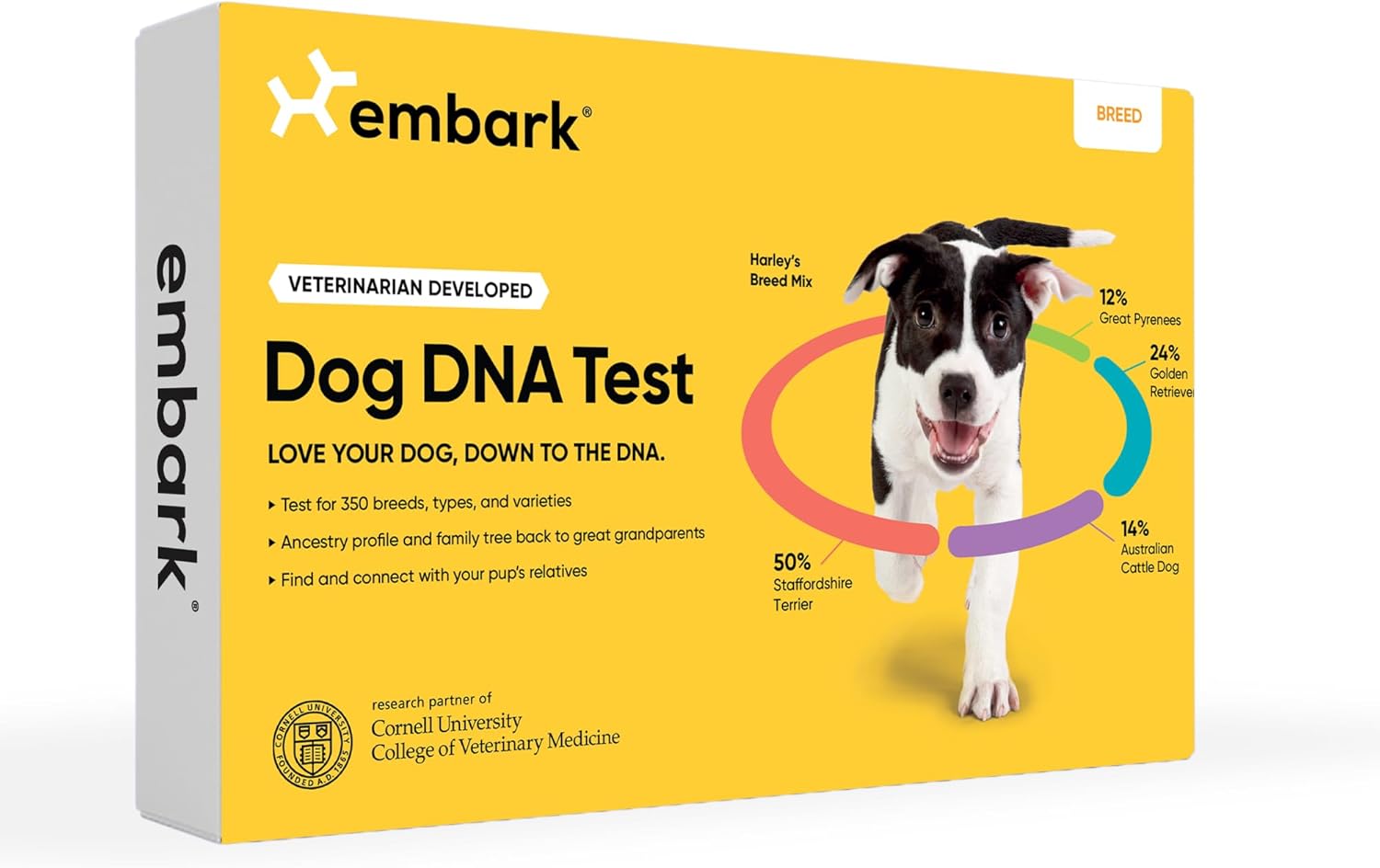 | 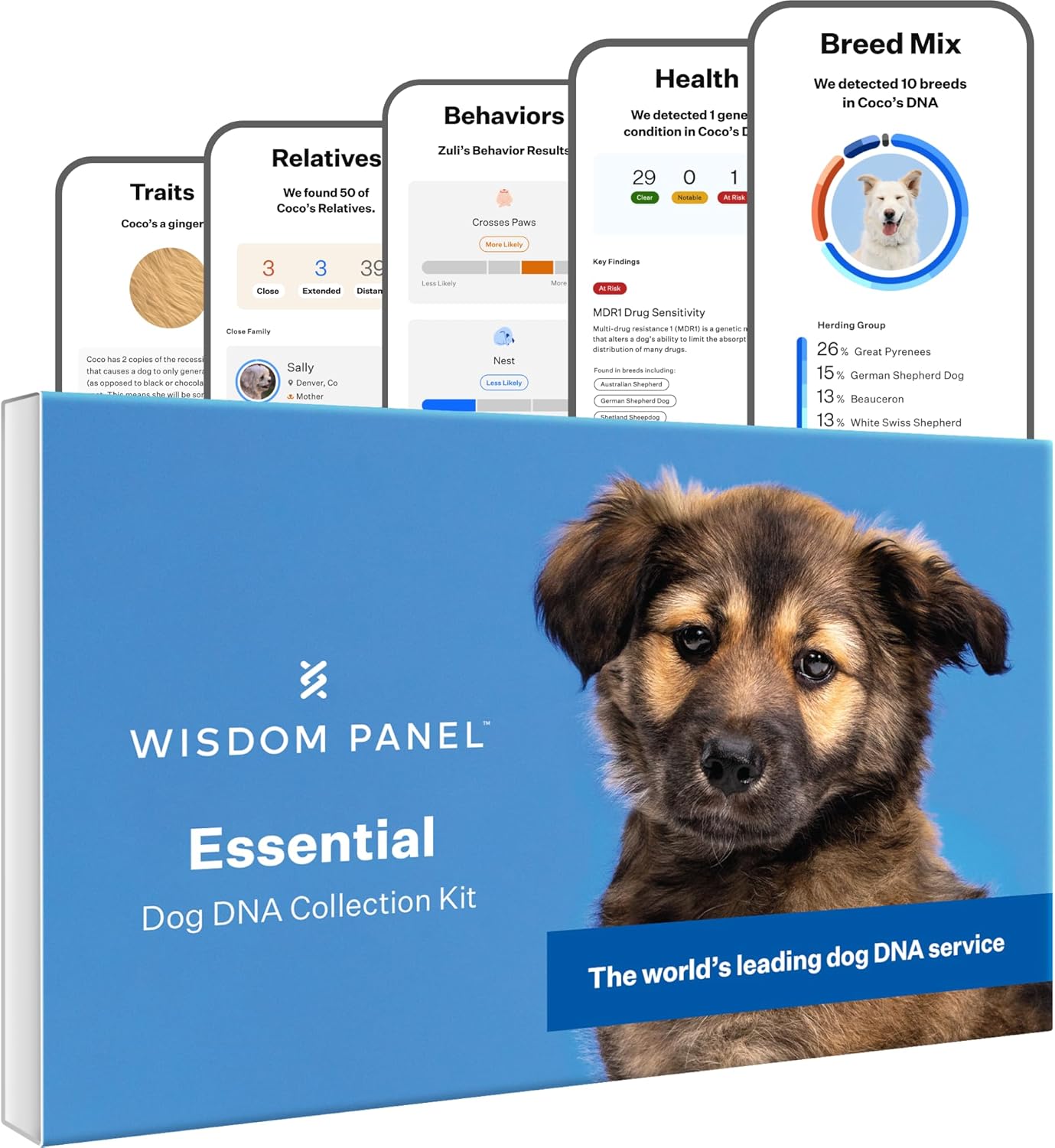 | 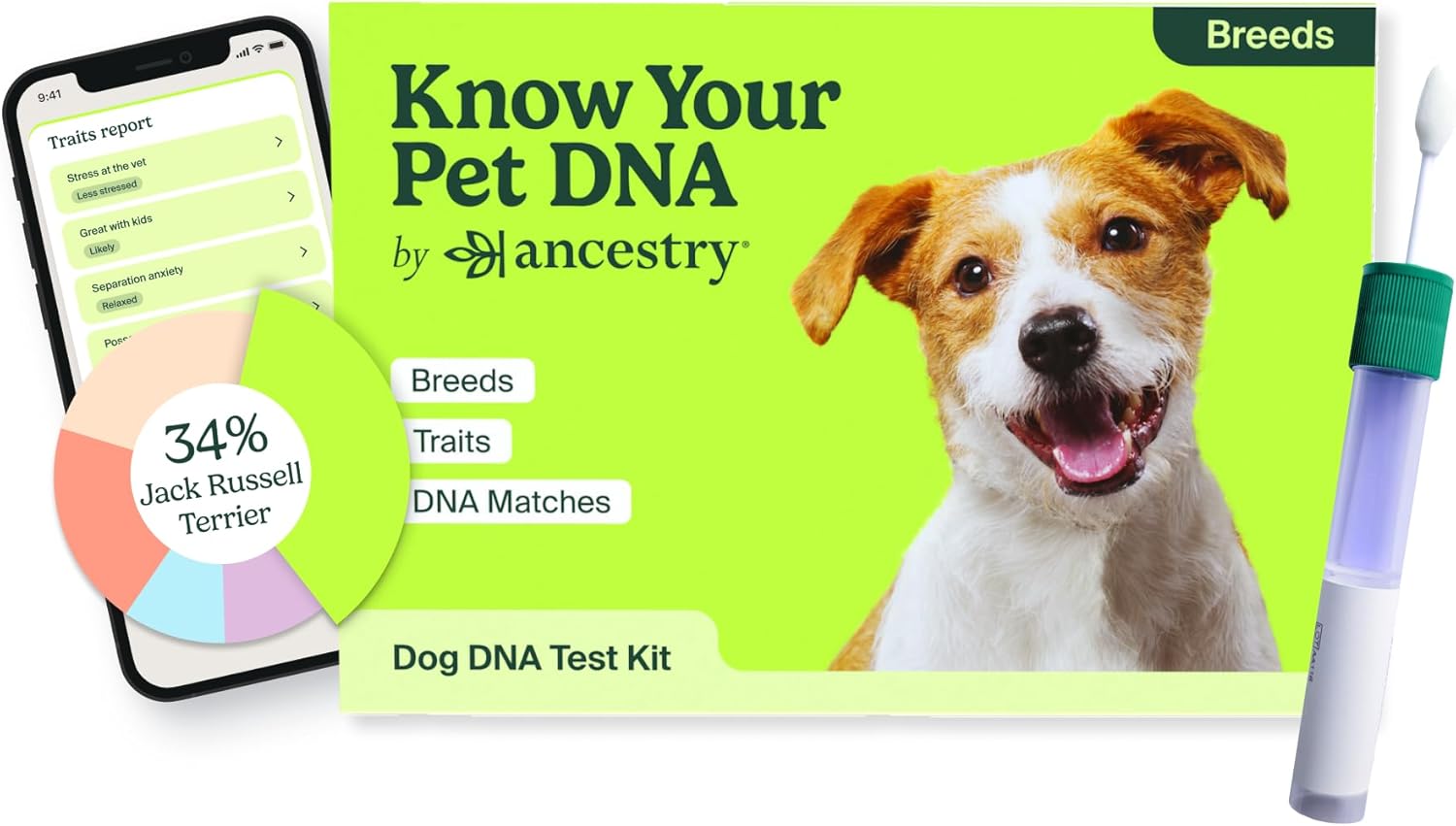 | 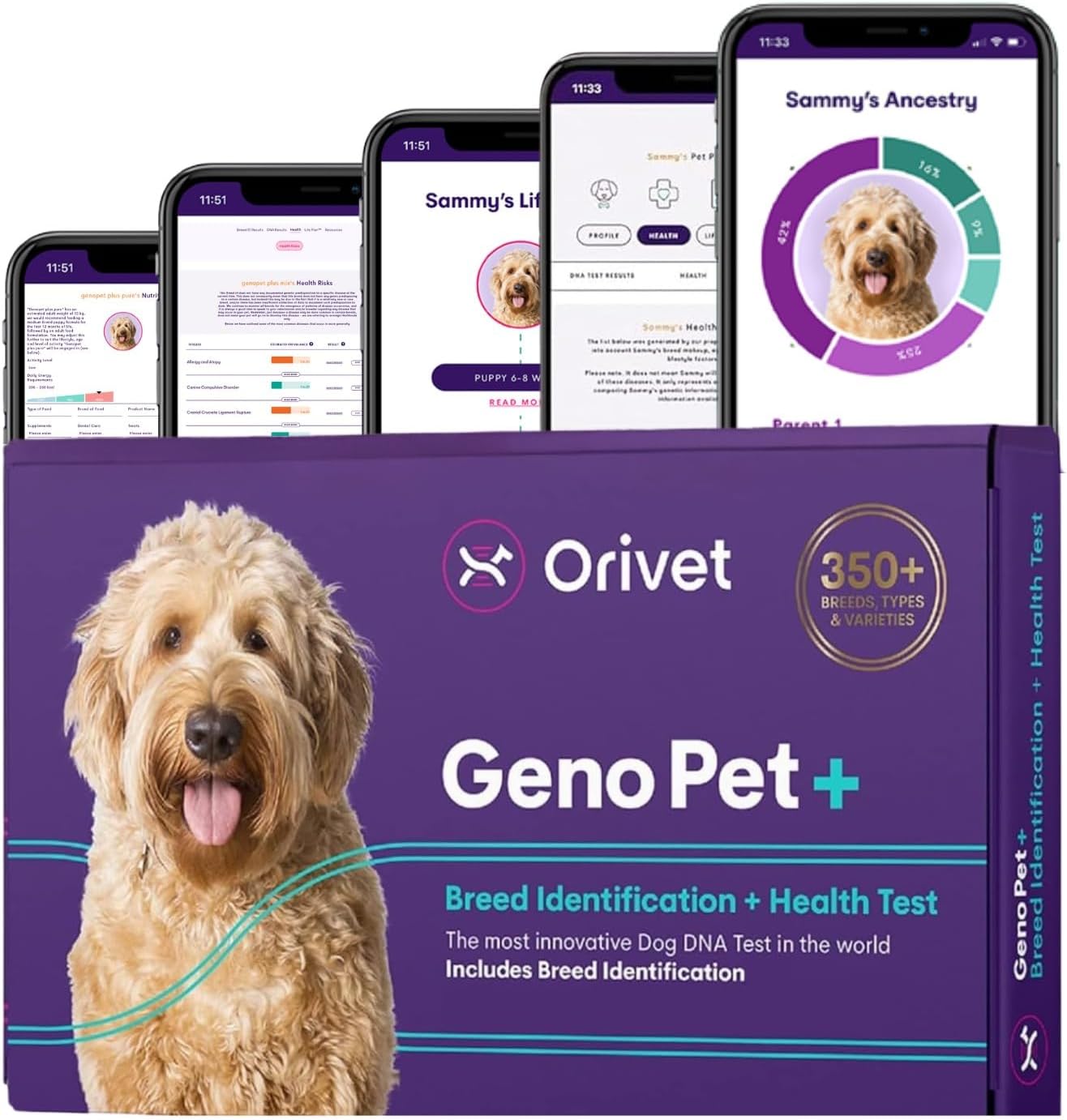 |  | |
Best for | Best overall breed + health | Most detailed all-in-one report | Simplest dashboard experience | Wellness planning style report | Budget-friendly deeper option |
Breed database size | 400+ breeds | 365+ breeds | 400+ breeds | Around 400 breeds | 350+ breeds |
Health screening | 270+ genetic health conditions | 265+ genetic health conditions | 200+ health screenings | Over 200 diseases and traits | “Health concerns” insights (not positioned as a full medical screen) |
Traits and behavior | Traits included | 50+ traits and behavior predispositions | Traits included | Traits and health framing included | Personality traits included |
Relatives matching | Yes | Yes | Matches included | Not the main focus | Not the main focus |
Typical results time | 2–4 weeks | About 3 weeks | 2–4 weeks | Often 2–4 weeks | About 3 weeks (varies by kit) |
Price |  | | | | |
Step 1: Pick your goal (this is what separates smart buyers from stressed buyers)
Most owners fall into one of these buckets:
- Breed identification: “What breeds are in my rescue?”
- Health risk planning: “Are there inherited risks I should watch for?”
- Medication safety: “Could my dog react badly to certain drugs?”
- Breeder documentation: “I need parentage or registry identity testing.”
- Traits and appearance: “Coat color, coat type, size-related traits.”
- Behavior prediction: “Will my dog be anxious or aggressive?” (This one is the trickiest.)
Your “best” test type changes depending on the bucket. And if you choose the wrong bucket, you get results that feel useless or scary.
Step 2: Understand what dog DNA tests actually are
Breed ancestry tests
These compare your dog’s DNA markers to a reference panel of dogs from known breeds, then estimate ancestry.
Why they can disagree: reference panels differ, algorithms differ, and mixed ancestry is hard. A peer-reviewed comparison found meaningful variation across direct-to-consumer tests and raised concerns about how results can be presented, including the risk of non-DNA inputs influencing outcomes in at least one approach.
Health screening tests
These look for specific genetic variants associated with inherited conditions or carrier status.
Important: “risk” is not a diagnosis. UC Davis emphasizes that results need context and are best used with veterinary guidance.
Medication sensitivity tests (targeted)
These focus on variants that can change how a dog processes certain drugs. AAHA notes that single-gene tests (like MDR1 and others) can help veterinarians make safer drug and surgical decisions.
Parentage and identity testing (breeder and registry style)
These are designed to confirm who a dog is and who the parents are, not “what breed mix.” AKC is very clear that its DNA profiling is for identity and parentage only, not health or breed.
Behavior prediction tests
This is where marketing often runs ahead of reality. A 2025 PNAS study found genetic tests can predict appearance traits well, but not individual behavior using a small set of marketed variants.
Best dog DNA test kit quick picks
- Best overall: Embark Breed + Health
- Best “everything in one report” alternative: Wisdom Panel Premium
- Best for a big-brand, easy dashboard experience: Know Your Pet DNA by Ancestry
- Best for wellness planning style reporting: Orivet GenoPet Plus
- Best budget-friendly option: DNA My Dog Essential (or Premium if you want deeper extras)
The comparison framework that beats every “Top 10” list
When you compare dog DNA tests, score them on these 8 factors. This is what most competitor articles skip.
1) Reference panel strength (breed tests)
If the company does not have strong coverage for a breed, results can skew. In a large Dog Aging Project analysis, disagreements often involved breeds not included in a reference panel.
2) Transparency
Do they explain what markers they test, how results are generated, and what “confidence” means?
UC Davis notes companies often do not disclose methods or quality controls and there are no industry-wide standards in animal genetic testing.
3) Quality control and retesting policy
A real lab expects occasional failed samples and explains what happens next. VGL publishes detailed sampling guidance and contamination prevention tips, which is a strong sign of process maturity.
4) How results handle uncertainty
The best reports admit uncertainty instead of pretending 2% “tiny breeds” are gospel.
5) Health result actionability
The best health reporting answers: “What should I do next?” UC Davis urges caution and vet involvement for medical decisions based on genetic results.
6) Separation of breed, health, and behavior claims
If a company blurs these together, it’s a red flag. Behavior prediction is not at the same scientific maturity as appearance or some single-gene health variants.
7) Customer support that helps interpretation
Veterinary providers report clinical utility for genetic testing, but many have limited confidence interpreting some direct-to-consumer outputs, so good explanations matter.
8) Privacy and data controls
Do they clearly state retention, research opt-in, and deletion policies? UC Davis highlights the lack of regulation and the importance of understanding limits and disclosure.
Dog DNA tests compared: a practical “type vs type” table
Feature | |||||
|---|---|---|---|---|---|
| | | | | |
Best for | Best overall breed + health | Most detailed all-in-one report | Simplest dashboard experience | Wellness planning style report | Budget-friendly deeper option |
Breed database size | 400+ breeds | 365+ breeds | 400+ breeds | Around 400 breeds | 350+ breeds |
Health screening | 270+ genetic health conditions | 265+ genetic health conditions | 200+ health screenings | Over 200 diseases and traits | “Health concerns” insights (not positioned as a full medical screen) |
Traits and behavior | Traits included | 50+ traits and behavior predispositions | Traits included | Traits and health framing included | Personality traits included |
Relatives matching | Yes | Yes | Matches included | Not the main focus | Not the main focus |
Typical results time | 2–4 weeks | About 3 weeks | 2–4 weeks | Often 2–4 weeks | About 3 weeks (varies by kit) |
Price | | | | | |
A kennel-club style DNA profile is explicitly for identity and parentage, not health or breed.
Breeder-focused genetic diversity testing exists as a distinct category from consumer “breed mix” testing.
How to interpret results like a pro (so you do not spiral)
Rule 1: The top breeds matter most, the tiny ones matter least
Small percentages can bounce around across companies because the math is sensitive and reference panels differ. Peer-reviewed comparisons show variability across tests.
Rule 2: “Risk” is not “your dog will get this”
UC Davis is blunt about this. Genetic findings often require context and follow-up, not panic.
Rule 3: Do not use DNA to “diagnose” behavior
If a report claims it can predict personality from a few variants, treat it as entertainment. PNAS found those marketed behavior variants do not accurately predict individual behavior.
Rule 4: If your dog has symptoms, start with a vet workup
DNA is a supplement, not a substitute, especially when real symptoms are present.
The most common traps (and what to do instead)
Trap: “I’ll buy the most popular test and it will answer everything”
Instead: pick your goal, then pick your test type.
Trap: “My dog is 12% X breed, so they will act like it”
Instead: breed is not destiny, and behavior prediction is not reliable at the individual level.
Trap: “The report said high risk, so I’m changing food and meds”
Instead: bring results to your vet and ask what monitoring or confirmatory testing makes sense.
If you are also working on training and behavior, keep it simple. Focus on what you can control. We have a deep dive on training collars in our Bousnic review, and comparison guides like Bousnic vs Dogtra, if you are weighing tools alongside training plans.
How to get the cleanest sample (this matters more than people think)
Bad swabs lead to messy results and retests.
UC Davis VGL recommends:
- Cheek-and-gum brushing for DNA collection.
- Waiting until puppies are at least three weeks old.
- Avoiding contamination, including isolating puppies from littermates and waiting after nursing before sampling.
FAQ: Dog DNA Tests Compared
What is the most accurate dog DNA test?
Accuracy depends on your goal. Breed ancestry estimates can vary between companies and reference panels, while targeted single-gene tests can be clearer for narrow questions. Peer-reviewed comparisons show variation across direct-to-consumer breed results.
Why do dog DNA tests give different results?
Different tests use different reference panels, markers, and algorithms. Mixed ancestry makes the problem harder, and missing breeds in a reference panel can drive disagreement.
Are dog DNA breed results reliable for mixed breeds?
They can be useful, but treat them as estimates. Even large studies show that disagreement often happens when the dog’s breed is not represented in a panel or when owners have strict definitions of what “match” means.
Can dog DNA tests predict behavior or aggression?
Not reliably. A 2025 PNAS study found genetic tests predict appearance well but do not accurately predict individual behavior using commonly marketed variants.
Should I show my vet my dog’s DNA results?
Yes, especially health-related results. UC Davis recommends veterinary involvement to avoid misinterpretation and inappropriate decisions.
Are kennel club DNA profiles the same as dog DNA tests for breed and health?
No. Registry DNA profiling is for identity and parentage verification. It does not determine breed and it is not a genetic health test.
Other Interesting Articles
- Best Dog DNA Test Kit: Embark vs Wisdom Panel vs Ancestry and More
- Wisdom Panel vs Ancestry: Which Dog DNA Test Should You Buy?
- Wisdom Panel vs DNA My Dog: Which Dog DNA Test Should You Buy?
- Wisdom Panel vs Basepaws: Which Cat DNA Test Should You Buy?
- Wisdom Panel vs Embark: Which Dog DNA Test Should You Buy?
About the Author
PetsPal helps pet parents make smarter decisions with practical guides, clear comparisons, and real-world advice that keeps your dog’s wellbeing first. From “Dog DNA Tests Compared” to other common questions for dog and cat owners, we help pet owners of all types better care for their furry friends.
References
AKC: DNA profiling is identity and parentage verification only, not breed or health.
UC Davis: what animal genetic testing can and cannot tell you, plus the lack of regulation and risk of misinterpretation.
JAVMA 2024: systematic comparison of direct-to-consumer canine genetic tests and differences across results.
Dog Aging Project (Scientific Reports 2025): owner vs genetic breed identification, with disagreement often linked to reference panel gaps.
PNAS 2025: genetic tests predict appearance but not individual dog behavior using marketed variants.
UC Davis VGL: dog sample collection guidance and contamination prevention recommendations.