I'm a participant in the Amazon Services LLC Associates Program, an affiliate advertising program designed to provide a means for me to earn fees by linking to Amazon.com and affiliated sites.
PetsPal.org | Dog Grooming & Cleaning
Muddy paws are one of those small problems that can turn into a surprisingly big mess. One walk through wet grass or a slushy sidewalk, and your dog can leave dirty footprints across the floor, furniture, and carpets.
During winter, there’s another concern: road salt and chemical deicers can cling to paw pads and the spaces between toes, potentially causing irritation or problems if your dog licks the residue.
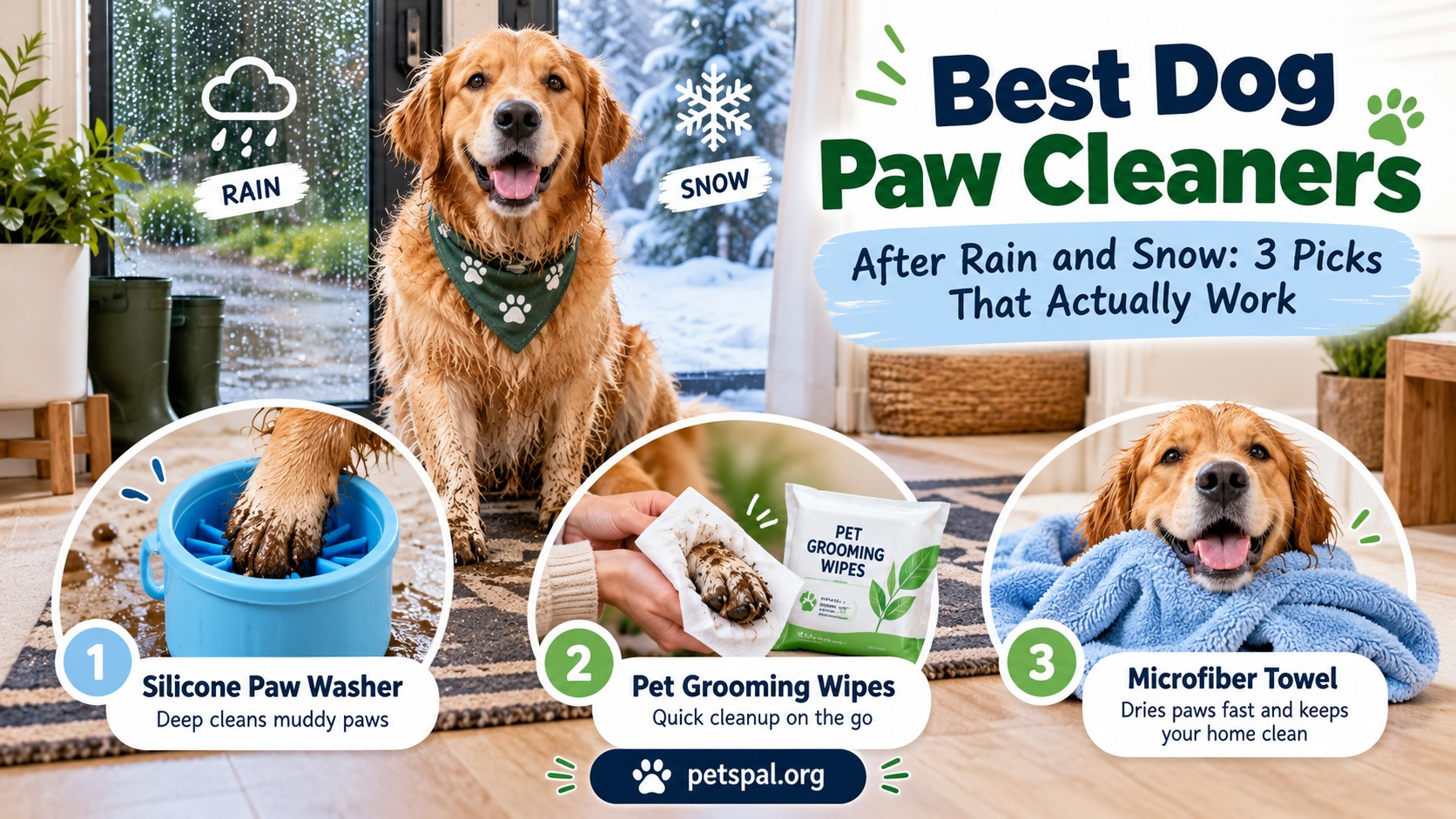
The best solution depends on what you’re cleaning. A silicone paw washer is best for thick mud, grooming wipes are convenient for lighter dirt, and an absorbent microfiber towel is best for wet paws after rain or snow.
For most households, we’d choose the Dexas MudBuster as the best overall paw cleaner, but you may find that a much simpler product works better for everyday walks.
Quick Comparison: Best Dog Paw Cleaners
Feature | |||
|---|---|---|---|
 |  |  | |
Best for | Thick mud and dirt | Quick everyday cleaning | Rain, snow and wet fur |
Type | Water-filled silicone paw washer | Disposable pet wipes | Reusable microfiber towel |
Requires water | Yes | No | Only if rinsing first |
Removes caked-on mud | Best of these three | Limited | Limited without rinsing |
Dries wet paws | No | Limited | Yes |
Reusable | Yes | No | Yes |
Size options | Small, medium, large | Standard and XL wipes | One large towel design |
Main drawback | Requires rinsing and drying afterward | Ongoing replacement cost | Doesn’t wash away chemicals |
Price |  | | |
Our recommendation: The Dexas MudBuster is the most useful single product if muddy paws are your biggest problem. Earth Rated wipes are better for quick touch-ups, while the Soggy Doggy Super Shammy is an excellent companion to either product.
For winter walks involving deicing chemicals, clean the paws with water before drying them.
1. Dexas MudBuster: Best Overall Dog Paw Cleaner for Mud
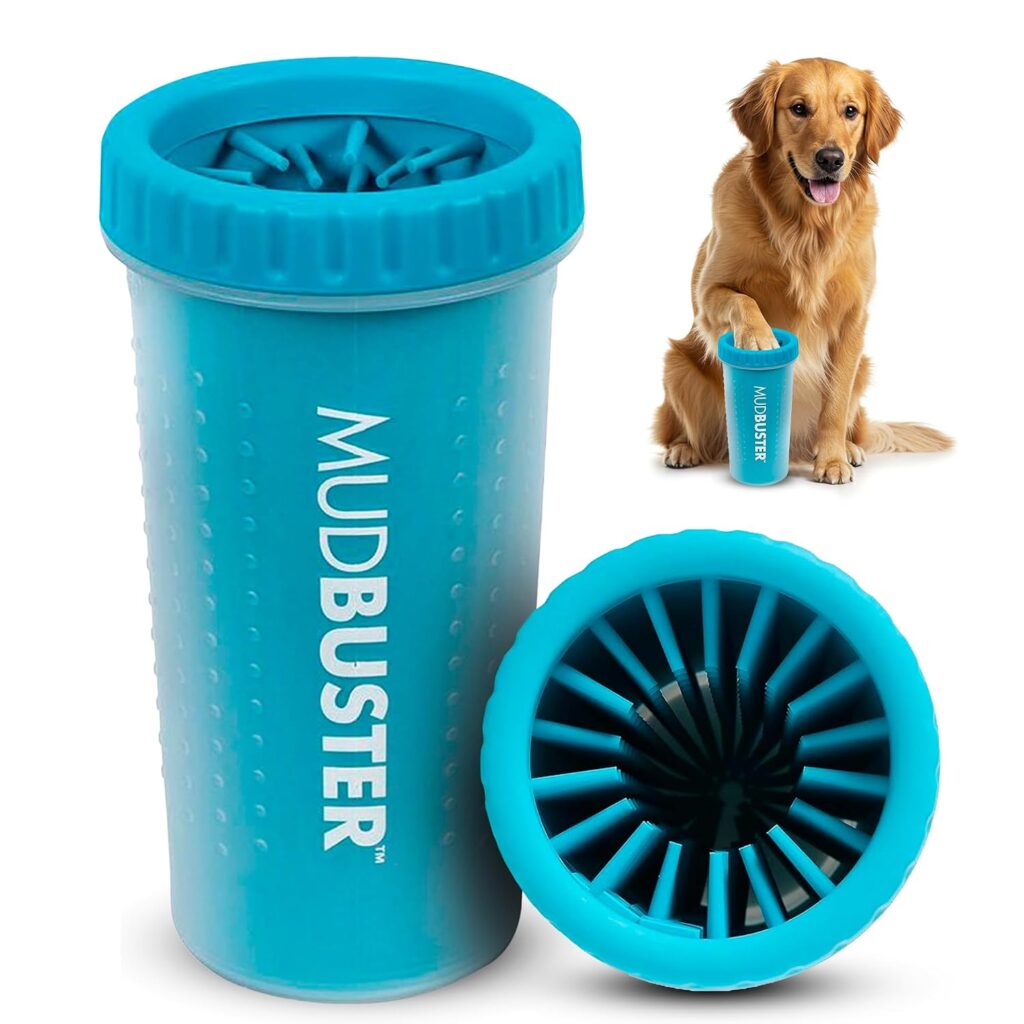
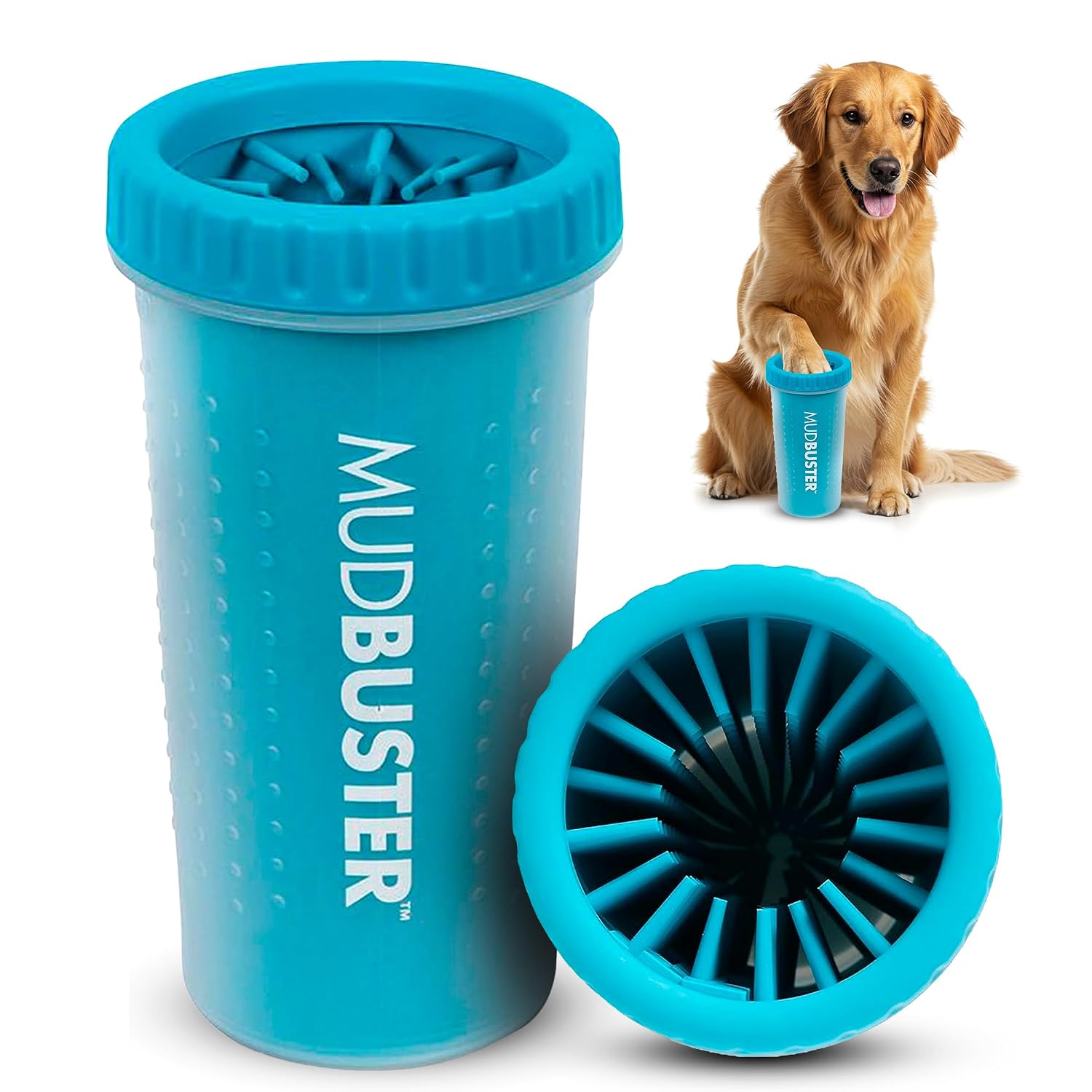
The Dexas MudBuster is our top recommendation for dogs that frequently come home with muddy paws.
Unlike a towel that primarily wipes away surface dirt, the MudBuster uses water and soft silicone bristles to loosen dirt from around the paw pads.
Its design is simple: a tumbler-shaped container with a removable silicone cleaning insert.
You add water, guide your dog’s paw inside, and gently rotate the container back and forth.
The silicone bristles move around the paw, helping dislodge mud and debris that might otherwise end up on your floors.
Afterward, you remove the paw, dry it with a towel, and repeat with the remaining feet.
Why the MudBuster works well after rainy walks
Mud frequently becomes trapped around a dog’s paw pads and between its toes.
This can be particularly noticeable with longer-haired dogs or dogs that regularly walk through wet grass, gardens, or muddy parks.
A towel can wipe away surface mud, but removing dirt from the spaces between toes often takes additional effort.
The MudBuster makes that process more convenient by combining water with gentle brushing.
For example, imagine taking your Labrador Retriever through a muddy park.
When you return home, you could fill the MudBuster with lukewarm water and clean each paw before your dog enters the living room.
Rather than washing all four feet in a bathtub, you can perform the cleanup near the door.
However, the MudBuster isn’t completely mess-free. You’ll still need somewhere to discard the dirty water and a towel to dry each foot.
Choosing the right MudBuster size
Dexas sells three sizes:
Size | Manufacturer’s paw-width guidance |
|---|---|
Small | Up to 2 inches |
Medium | Approximately 2.5–3.5 inches |
Large | For larger paws, approximately 3.5 inches and above |
Measure your dog’s paw at its widest point before ordering. Dexas has published slightly different sizing language across product versions, so confirm the dimensions of the selected listing rather than choosing solely by breed.
A container that’s too small may squeeze the paw uncomfortably. One that’s excessively large may be awkward to maneuver.
How easy is the MudBuster to clean?
The silicone insert can be removed from the container for washing.
Dexas also identifies the components as dishwasher-safe, making deeper cleaning relatively straightforward.
After every muddy walk, discard the dirty water and rinse the container. Allow the components to dry before storing them.
This matters because repeatedly leaving dirty water in a closed paw washer could lead to unpleasant odors and buildup.
What are the disadvantages?
The biggest drawback is that your dog must tolerate having each paw placed inside the container.
Some dogs accept this immediately, while others dislike the sensation of the silicone bristles or having their feet handled.
Start gently and allow your dog to become comfortable with the cleaner before using it after a particularly muddy walk.
Also, avoid twisting aggressively. The goal is to move the silicone bristles around the paw, not to rotate or torque the dog’s leg.
Pros
- Effective design for loosening thick mud
- Uses ordinary water
- Reusable rather than disposable
- Removable silicone insert
- Multiple sizes
- Compact enough to keep near a doorway
Cons
- Requires a separate drying towel
- Needs cleaning after use
- Some dogs dislike placing paws inside it
- Dirty water must be discarded
- Less convenient for a quick cleanup outside the home
Our verdict: The Dexas MudBuster is the best choice for owners who regularly deal with muddy paws after walks, hikes, or backyard play.
It’s particularly worthwhile for medium and large dogs that bring substantial amounts of dirt indoors.
2. Earth Rated Unscented Grooming Wipes: Best for Quick Paw Cleaning
Not every walk ends with a dog covered in mud.
Sometimes the paws are simply dusty, slightly dirty, or marked by wet pavement.
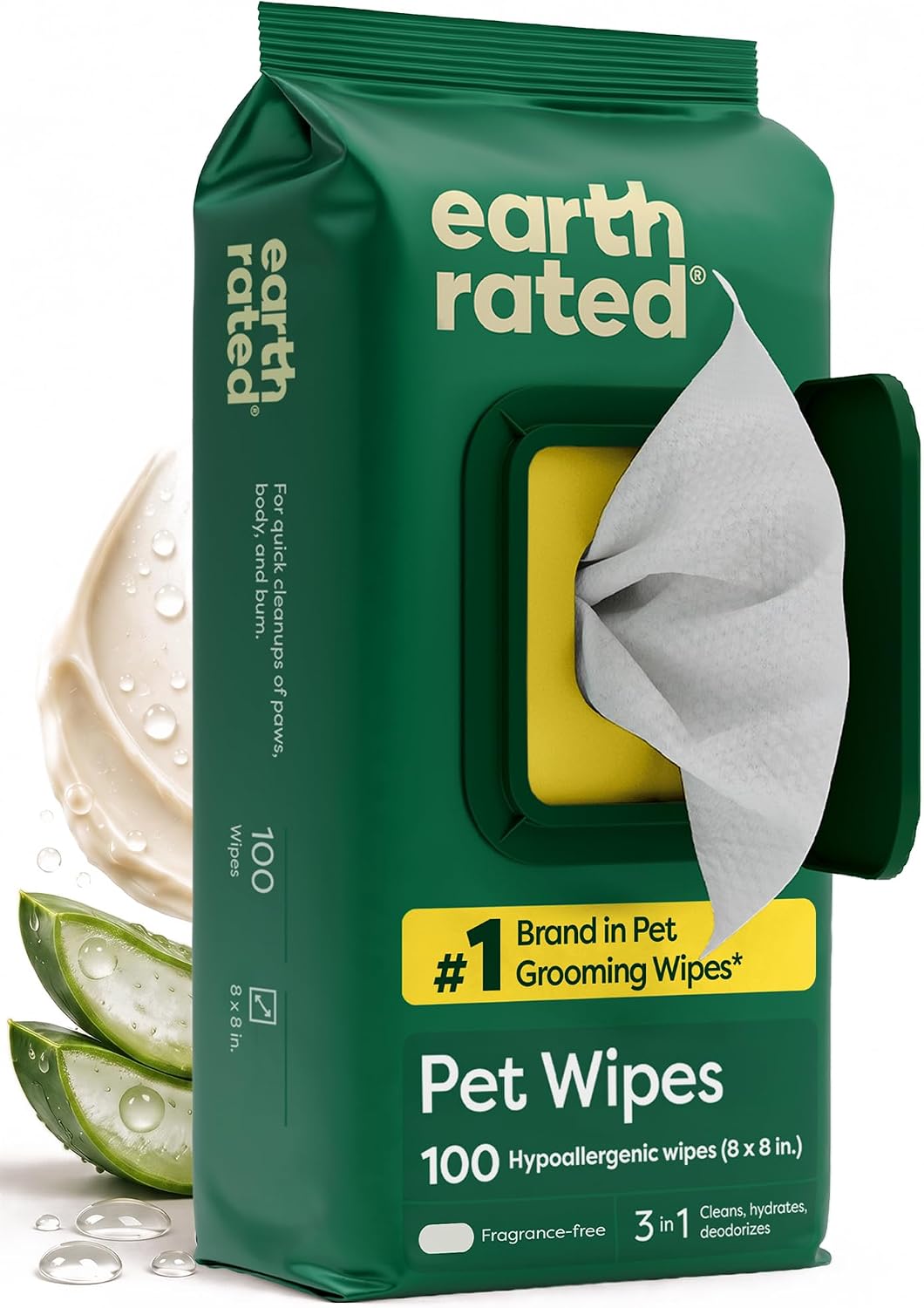
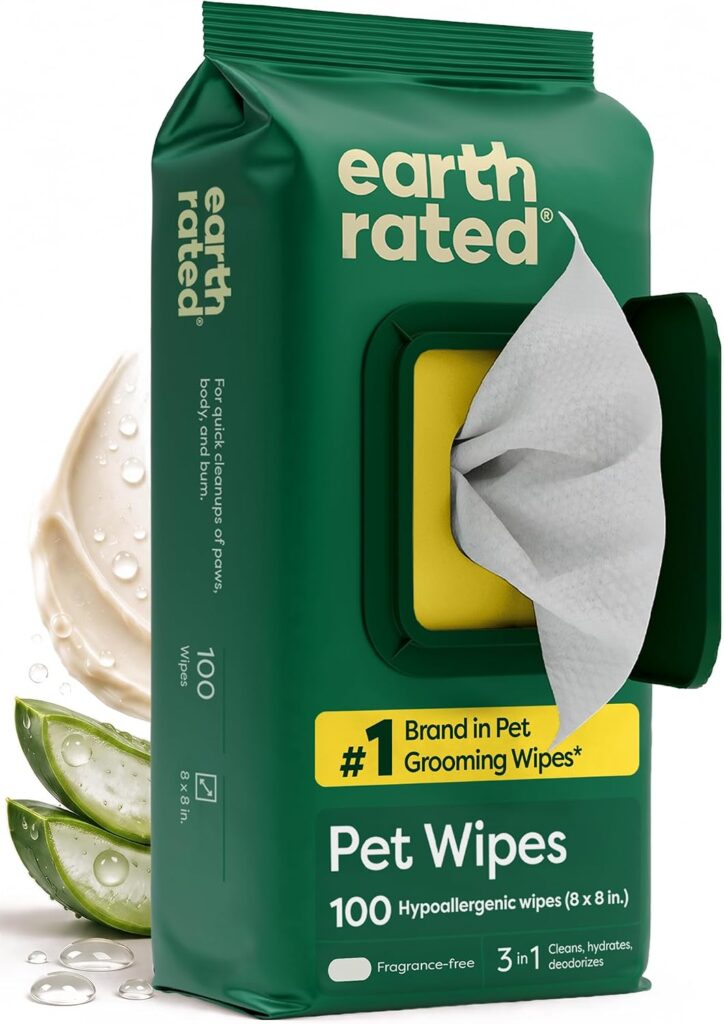
For these situations, a package of Earth Rated Unscented Grooming Wipes may be more convenient than filling a paw washer with water.
These wipes are designed for routine cleaning of paws, fur, and other external areas.
The standard wipes measure approximately 8 by 8 inches and have a textured surface that helps lift dirt from the coat and paw pads.
Earth Rated also offers larger wipes for bigger dogs or broader cleaning jobs.
Why choose unscented wipes?
Earth Rated offers several fragrance options, but we recommend the unscented version for routine paw care.
Dogs have sensitive noses, and adding fragrance usually isn’t necessary for removing dirt.
The unscented wipes contain ingredients such as aloe vera, shea butter, and chamomile, and the manufacturer describes them as hypoallergenic and dermatologist-tested.
However, hypoallergenic doesn’t mean that every dog will tolerate every ingredient.
If your dog has particularly sensitive skin, test the wipe on a small area first.
Stop using it if redness, itching, or discomfort develops.
When are grooming wipes most useful?
Their biggest advantage is convenience.
You don’t need to fill a container, find an electrical outlet, or rinse a separate device afterward.
Keep a package near the front door or in the car, and you can clean paws after an ordinary walk.
For example, if your dog walks across slightly damp pavement and picks up dirt, a wipe may be enough to remove most of the residue.
They can also be useful after trips to the park or for quick cleanup before your dog climbs onto furniture.
Are they good for winter road salt?
They can help remove light surface residue, but don’t rely on one wipe to clean heavily contaminated paws.
Road salt and chemical deicers can collect between toes and around paw pads.
For significant exposure, rinsing with lukewarm water is preferable, followed by thorough drying.
This is especially important because dogs may lick their feet after coming indoors.
A grooming wipe is useful for convenience, but it isn’t a substitute for proper rinsing when chemicals are present.
What about long-term cost?
Unlike a reusable paw washer or towel, wipes must be replaced.
Earth Rated lists its standard 100-wipe package at approximately $9.99.
If you use one wipe after each daily walk, that’s approximately 365 wipes annually, or roughly $40 per year when purchasing four 100-count packages.
If you regularly need several wipes for all four paws, the expense increases considerably.
These estimates exclude taxes, discounts, and changes in packaging.
Pros
- Very convenient for quick cleanup
- No water or equipment setup required
- Large, textured wipes
- Unscented option
- Portable for car trips and walks
- Can also clean light dirt from fur
Cons
- Ongoing replacement cost
- Less effective for heavy, caked-on mud
- Creates disposable waste
- May not thoroughly remove winter deicers
- Some dogs may react to ingredients
Our verdict: Earth Rated Unscented Grooming Wipes are best for everyday paw maintenance and owners who prioritize speed.
They aren’t our first choice for thick mud or significant salt exposure, but they’re convenient to keep near the door or in the car.
3. Soggy Doggy Super Shammy: Best for Drying Paws After Rain and Snow
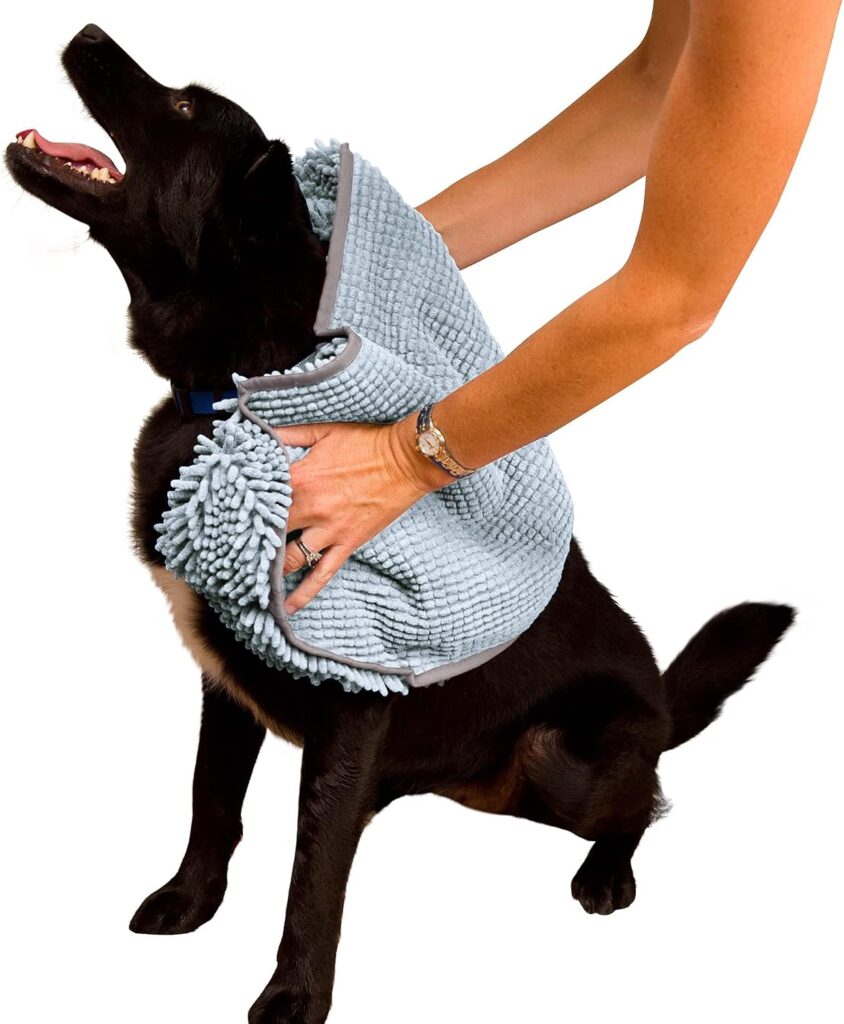
The Soggy Doggy Super Shammy isn’t a traditional paw washer.
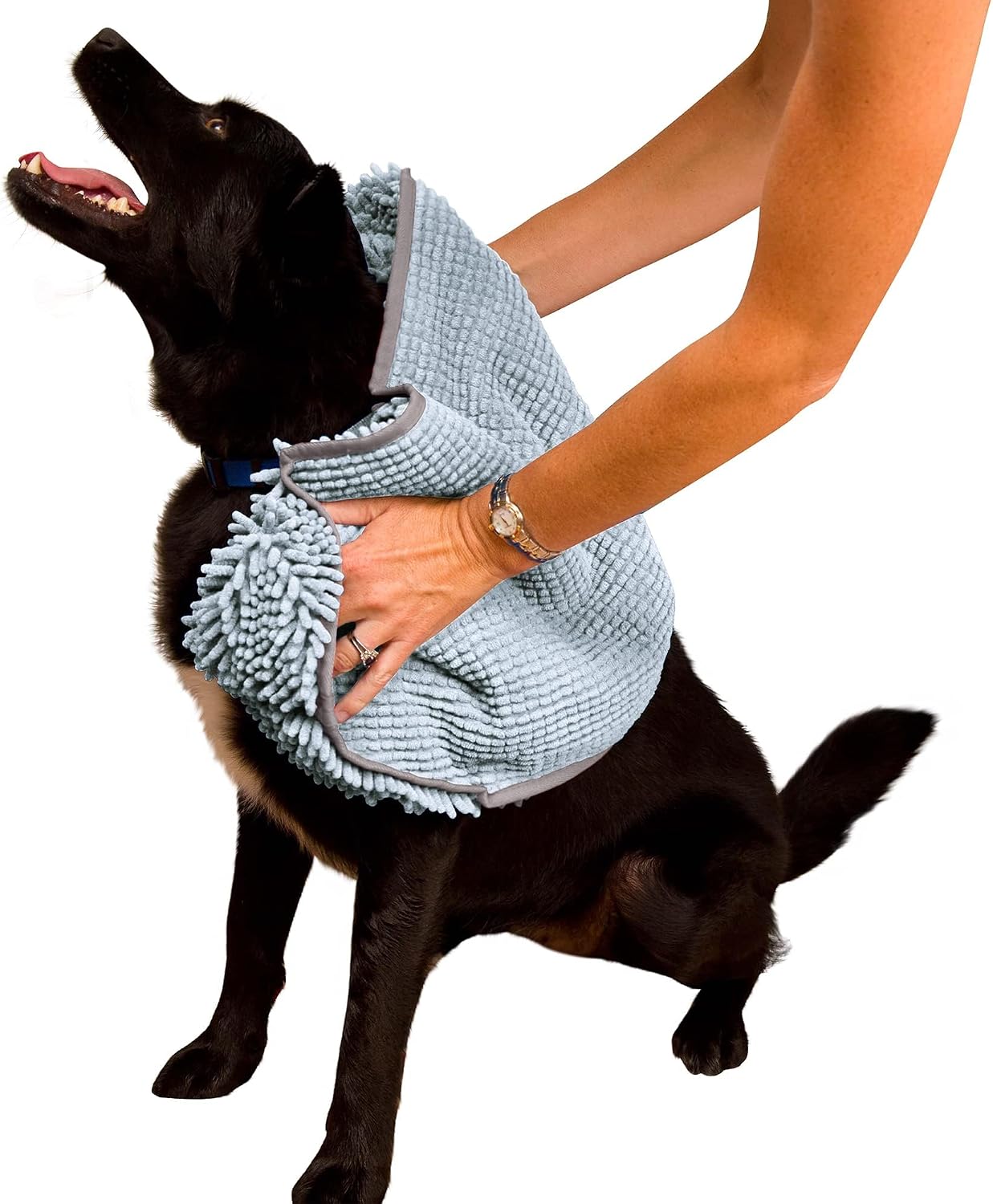
Instead, it’s a highly absorbent microfiber chenille towel designed to remove moisture from your dog’s fur and paws.
That makes it particularly useful after rainy walks, snowy outings, or any situation where your dog returns home wet rather than heavily covered in mud.
The towel features two hand pockets, allowing you to slide your hands inside and maintain a better grip while drying your dog.
This is a practical difference from an ordinary bath towel.
Instead of repeatedly repositioning a large piece of fabric, you can use the hand pockets to rub and blot wet fur.
Why is the Super Shammy useful after snow?
Snow and slush can leave moisture on your dog’s paws, lower legs, chest, and belly.
Even after removing visible snow, water may remain trapped in longer fur.
The Super Shammy is made from absorbent chenille microfiber, which helps collect that moisture.
Soggy Doggy advertises the material as capable of absorbing up to seven times its weight in water under its stated conditions.
That is a manufacturer claim rather than a standardized comparison with every competing towel.
Still, the material and design make sense for drying a wet dog.
A towel is not a substitute for rinsing off road salt
This is particularly important in winter.
If your dog has walked through treated sidewalks or roads, first rinse or wipe away the deicing residue.
Then use the Super Shammy to remove moisture.
Simply rubbing salty paws with a dry towel may leave some residue behind.
A practical winter routine is to rinse paws with lukewarm water, check between the toes, and use the towel to dry the pads and surrounding fur.
Is it worth buying instead of using an ordinary towel?
That depends on your dog.
For a small dog that only gets slightly damp, an ordinary towel may work perfectly well.
But if you have a Golden Retriever, Labrador, or other dog that frequently comes home soaked, an absorbent pet-specific towel may be more convenient.
The hand pockets can also be useful for drying legs and feet without wrestling with loose towel corners.
What are the disadvantages?
The Super Shammy doesn’t actually wash dirt away.
If your dog’s paws are covered in thick mud, the towel will become dirty quickly and may spread some of that mud into the fabric.
It’s best used after washing or for moisture that doesn’t contain much dirt.
You’ll also need to launder and dry it regularly.
Pros
- Absorbent microfiber chenille
- Convenient hand pockets
- Reusable and machine-washable
- Useful for paws, legs, chest, and belly
- No chemicals or disposable wipes required
- Good companion to a paw washer
Cons
- Doesn’t rinse away road salt
- Won’t remove embedded mud as effectively as washing
- Takes time to dry after heavy use
- More expensive than an ordinary household towel
- Requires laundering
Our verdict: The Soggy Doggy Super Shammy is our favorite of these three for drying dogs after rain or snow.
It’s particularly appealing for owners with larger or long-haired dogs, but it works best as part of a cleaning routine rather than as a replacement for washing muddy or chemically contaminated paws.
4. Paw Washer vs Wipes vs Towel: Which Actually Works Best?
The biggest mistake is expecting one type of cleaner to work equally well for every outdoor condition.
Rain, mud, snow, and road salt create different cleaning problems.
Outdoor condition | Best cleaning method | Why |
|---|---|---|
Thick mud | Dexas MudBuster, then towel | Water and silicone bristles loosen dirt |
Light dirt or dust | Earth Rated wipes | Fast surface cleaning |
Wet grass | Super Shammy | Absorbs moisture |
Clean snow | Super Shammy after checking paws | Dries melting snow and moisture |
Road salt or deicers | Lukewarm water rinse, then towel | Removes residue before drying |
Sand between toes | Water rinse or MudBuster | Helps loosen particles |
Light dirt during travel | Earth Rated wipes | Portable and convenient |
For most households, we recommend having a reusable water-cleaning option and a drying towel near the entrance.
Wipes are useful as an additional convenience, but they don’t necessarily need to replace water and a towel.
5. How to Clean Your Dog’s Paws After Snow and Road Salt
Winter paw cleaning deserves special attention because the concern isn’t only keeping floors clean.
Road salt and chemical deicers can irritate paw pads and the sensitive skin between toes.
Some products can also cause illness if swallowed.
The ASPCA recommends washing and drying paws after winter walks to remove salt, ice, and potentially harmful chemicals.
Step 1: Check for ice and debris
Before cleaning, look at your dog’s feet.
Pay particular attention to the spaces between toes and around paw pads.
Longer-haired dogs may develop compacted snow or ice balls.
If ice is stuck to the fur, gently melt it with lukewarm water rather than pulling it out.
Step 2: Rinse with lukewarm water
Use clean, lukewarm water to remove salt, slush, and chemical residue.
You can use a shallow basin, a soft cloth, or an appropriate paw washer.
Avoid hot water, particularly if the pads are irritated.
Rinse carefully between the toes.
Step 3: Dry thoroughly
Use a clean towel to remove moisture from the pads and surrounding fur.
Pay attention to the spaces between toes, where moisture can remain trapped.
The Soggy Doggy Super Shammy is especially convenient for this part of the routine.
Step 4: Inspect the paw pads
Check for redness, cracking, bleeding, swelling, or areas your dog repeatedly licks.
If your dog appears painful, is limping, or develops persistent irritation, contact your veterinarian.
Step 5: Consider preventative protection
For dogs that regularly walk on salted sidewalks, appropriately fitted dog booties or veterinarian-approved paw protection products may help reduce exposure.
However, products labeled “pet-safe” aren’t necessarily harmless if eaten. Avoid allowing your dog to lick or ingest deicing chemicals.
A good winter paw-cleaning routine takes only a few minutes and can help prevent both messy floors and avoidable exposure to irritating substances.
6. How to Clean Muddy Dog Paws Without Making a Bigger Mess
A little preparation can make rainy-day cleanup considerably easier.
The simplest solution is to establish a cleaning area near the entrance your dog uses most often.
Keep a paw washer, clean water, an absorbent towel, and a washable floor mat nearby.
When your dog returns from a muddy walk, pause before allowing it to run through the house.
For thick mud, gently remove larger clumps and wash each paw with water.
A silicone paw washer can help, but don’t scrub aggressively.
Once the dirt is removed, dry the paws before your dog walks across slippery floors.
For lighter dirt, a grooming wipe may be sufficient.
The goal isn’t to create an elaborate grooming session after every walk. It’s to establish a short, predictable routine that prevents the mess from spreading.
Can a doormat replace a paw cleaner?
Not completely.
A highly absorbent doormat can catch moisture and some surface dirt, especially when your dog walks across it.
However, mats generally don’t clean between toes or remove debris lodged around paw pads.
They’re best viewed as a useful addition to paw cleaning rather than a complete replacement.
If you already use a Muddy Mat or Soggy Doggy doormat, pairing it with a paw washer or towel creates a more complete entryway setup.
7. How Often Should You Wash Your Dog’s Paws?
You don’t need to perform an elaborate wash after every short walk.
Cleaning frequency should reflect what your dog encounters outdoors.
For example, a walk on a dry, clean sidewalk may require little more than checking the paws.
A walk through muddy grass might justify washing each foot.
A winter walk through treated sidewalks should involve cleaning off salt and chemical residue before your dog begins licking its feet.
Avoid excessive scrubbing, harsh household soaps, or repeated use of irritating grooming products.
Frequent washing with strong cleansers may dry the skin.
Plain lukewarm water is often sufficient for routine dirt and salt removal.
If your dog’s pads become persistently red, cracked, itchy, or uncomfortable, speak with your veterinarian rather than increasing the frequency of cleaning products.
8. Which Paw Cleaner Is Best for Different Dogs?
Your situation | Our pick |
|---|---|
Large dog with thick mud after walks | Dexas MudBuster |
Small dog with lightly dirty paws | Earth Rated Wipes |
Dog returning wet after rain | Soggy Doggy Super Shammy |
Dog walking through salted sidewalks | Water rinse, followed by Super Shammy |
Dog dislikes having paws placed in containers | Wipes or a damp cloth |
Long-haired dog with wet legs and belly | Super Shammy |
Want a reusable cleaner | MudBuster |
Need something portable for the car | Earth Rated Wipes |
Want one complete cleanup routine | MudBuster plus absorbent towel |
For most owners, the best purchase is the product that addresses the mess they deal with most frequently.
If thick mud is a daily problem, start with a paw washer.
If your dog mainly comes home wet, a quality towel is likely more useful.
And if most walks leave only light surface dirt, you may not need anything more elaborate than pet wipes or a damp cloth.
Frequently Asked Questions
What is the best dog paw cleaner for muddy paws?
The Dexas MudBuster is our best overall choice for muddy paws because it combines water with soft silicone bristles to loosen dirt. It is especially useful when mud becomes trapped around paw pads or between toes. Dry the paws afterward.
What is the best way to clean dog paws after snow?
Remove visible snow and ice, rinse away any road salt or deicing residue with lukewarm water, and dry the paws thoroughly. Check between toes for trapped ice and inspect the pads for redness or irritation.
Are dog paw washers worth buying?
They can be worthwhile if your dog regularly gets muddy paws. A reusable paw washer may be more convenient than washing all four feet in a bathtub. However, a towel or damp cloth may be sufficient for dogs that rarely encounter thick mud.
Can dog grooming wipes remove road salt?
Wipes can remove some surface residue, but thorough rinsing with lukewarm water is preferable after significant exposure to deicing chemicals. Dry the paws after rinsing and check for irritation.
Can I use baby wipes on my dog’s paws?
Pet-specific grooming wipes are generally a better choice because their ingredients are selected for animal grooming. Some baby wipes contain fragrances or other ingredients that may irritate a dog’s skin. Plain water and a soft cloth are another simple option.
Is the Dexas MudBuster safe for dogs?
It’s designed for canine paw cleaning with soft silicone bristles. Use the correct size, rotate the container gently, and avoid using it over injured or painful paws. Stop if your dog appears uncomfortable.
Should I use soap when cleaning muddy paws?
Plain lukewarm water is often enough. If additional cleaning is necessary, use a product formulated for dogs and follow its instructions. Avoid harsh household detergents or disinfectants.
How do I remove ice balls between my dog’s toes?
Use lukewarm water or a warm, damp cloth to gently melt the ice. Don’t pull hardened ice balls from the fur. If this happens frequently, ask a professional groomer about maintaining the hair around the paw pads.
Can wet paws cause problems?
Persistently damp skin can contribute to irritation, particularly between toes. Dry your dog’s paws after washing, rain, or snow. If you notice persistent licking, redness, odor, or discomfort, contact your veterinarian.
Do I need all three products?
No. Most households can manage with one reusable cleaning method and a towel. Wipes are convenient but optional. Choose products based on your dog’s habits and the conditions you encounter most frequently.
Final Verdict: Which Dog Paw Cleaner Should You Buy?
For owners who regularly deal with muddy footprints, the Dexas MudBuster is the best overall dog paw cleaner of these three options.
Its reusable silicone-bristle design provides a practical way to loosen dirt around the paw pads without giving your dog a full bath.
However, it isn’t always the most convenient solution.
The Earth Rated Unscented Grooming Wipes are better for quick cleanup after relatively clean walks, especially when you’re away from home.
The Soggy Doggy Super Shammy is the most useful option for drying a dog after rain or snow, and it’s a particularly good addition to a winter paw-care routine.
If you only buy one product, consider the type of mess your dog brings home most often.
And when road salt or chemical deicers are involved, remember that cleaning isn’t just about protecting your floors.
Removing the residue and drying your dog’s feet is the more important part of keeping paws comfortable after winter walks.
Sources and Research Methodology
This guide is based on published manufacturer specifications and established veterinary and animal-welfare recommendations. PetsPal has not represented the selections as products personally tested.
- Dexas MudBuster official product information: https://store.dexas.com/products/mudbuster%C2%AE-as-seen-on-tv-new-colors
- Earth Rated Grooming Wipes: https://www.earthrated.com/products/wipes
- Soggy Doggy official website: https://soggydoggy.com/
- American Kennel Club, How to Clean Dog Paws: https://www.akc.org/expert-advice/home-living/clean-dog-paws/
- ASPCA, Cold Weather Safety Tips: https://www.aspca.org/pet-care/general-pet-care/cold-weather-safety-tips
- VCA Animal Hospitals, How to Keep Your Dog’s Paws Safe in Winter: https://vcahospitals.com/resources/lifestyle-dog/hazards-safety/dog-be-careful-with-ice-melt
Product availability, packaging, and prices may change. Always check sizing instructions and current product specifications before purchasing.