I'm a participant in the Amazon Services LLC Associates Program, an affiliate advertising program designed to provide a means for me to earn fees by linking to Amazon.com and affiliated sites.
Updated October 21, 2026 | Dog grooming comparison and buying guide
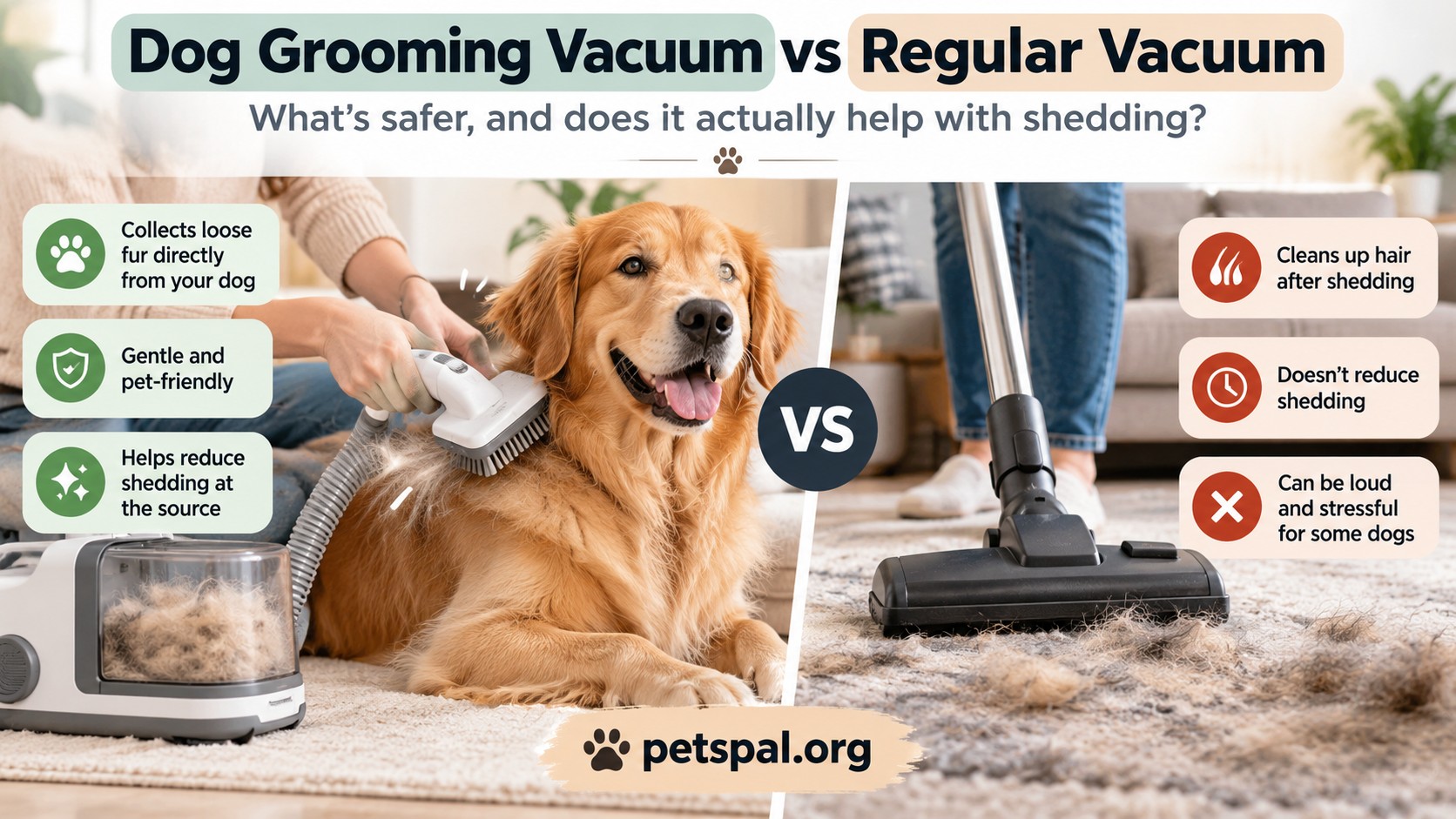
If you have a dog that sheds heavily, you probably know how quickly loose fur can take over your home. You brush your dog, collect a pile of hair, and somehow find even more of it on the carpet, couch, and clothing an hour later.
Dog grooming vacuums promise a solution by collecting loose fur while you brush, rather than waiting for the hair to fall around your home.
But are they actually better than a regular vacuum? And can you safely use the vacuum you already own to groom your dog?
A dog grooming vacuum is usually the better choice for collecting loose hair directly from your dog’s coat. A regular vacuum is better for cleaning hair that has already landed on floors, rugs, and furniture.
The distinction matters because these tools are designed for different jobs. Grooming vacuums use specialized brushing attachments, adjustable suction, and hair-collection systems. Household vacuums are designed primarily for cleaning surfaces, not for direct contact with an animal’s skin.
However, you don’t necessarily need to buy another machine. Some regular vacuums support manufacturer-approved pet grooming attachments, and a good brush combined with your existing vacuum may be sufficient.
Here’s how they compare, which coats benefit most, and when purchasing a dedicated grooming vacuum is worth the money.

Quick verdict: Dog grooming vacuum vs regular vacuum
Feature | Dog grooming vacuum | Regular household vacuum |
|---|---|---|
Primary purpose | Collects loose hair during grooming | Cleans floors, carpets, upholstery |
Direct use on dogs | With suitable grooming attachments | Only with approved pet-grooming accessories |
Specialized brushes | Usually included | Depends on compatible attachments |
Suction control | Often designed for grooming | Varies considerably |
Noise | Often optimized for quieter operation | Not necessarily pet-friendly |
Collects loosened undercoat | Yes, with appropriate brush | With compatible grooming attachment |
Cleans carpets thoroughly | Limited, depending on kit | Yes, with appropriate floor tools |
Clips or trims fur | Some kits include clippers | Usually no |
Best for | Managing shedding at the source | Removing hair already in the home |
Our recommendation: If you have a heavy-shedding dog and regularly groom indoors, a dedicated grooming vacuum can make cleanup considerably easier. If your dog sheds lightly or dislikes motor noise, a quality grooming brush and your existing household vacuum may be the more practical combination.
A grooming vacuum doesn’t automatically improve your dog’s coat. The brushing tool and technique still matter more than the motor’s advertised suction power.
1. What Is a Dog Grooming Vacuum, and How Does It Work?
A dog grooming vacuum combines a small vacuum system with attachments designed specifically for grooming pets.
Instead of brushing your dog and cleaning the loose fur afterward, the machine collects hair as you work.
Most grooming vacuum kits include some combination of a grooming brush, deshedding rake, electric clippers, and narrow cleaning attachments.
The grooming brush loosens hair from the coat. Suction then carries that hair through a hose and into a dust container.
Some models use retractable brush bristles. After a few strokes, you press or release a control to pull the bristles back, allowing the collected hair to be vacuumed into the container.
Others continuously collect loose fur as you brush.
The key point is that the brush does the grooming, while the vacuum collects the hair.
A grooming vacuum doesn’t simply pull out all the fur your dog would otherwise shed. Its effectiveness depends on the attachment, brushing technique, coat type, and how much loose hair is already present.
For example, a Golden Retriever with a shedding undercoat may release a considerable amount of loose fur during brushing. A grooming vacuum can collect much of that hair before it lands on the floor.
For a short-coated dog that sheds relatively little, the improvement may be much less noticeable.
Can a grooming vacuum replace brushing?
No. It changes how the loose hair is collected, but your dog’s coat still needs appropriate brushing and maintenance.
Different coats require different tools. A slicker brush may be helpful for some longer coats, while a rubber grooming brush may be more suitable for a smooth-coated dog.
The American Kennel Club emphasizes matching grooming tools to coat type because inappropriate brushing can damage hair or irritate the skin.
A grooming vacuum is most useful when it makes an already appropriate grooming routine cleaner and more convenient.
2. Can You Use a Regular Vacuum to Groom Your Dog?
You shouldn’t place an ordinary vacuum hose or upholstery nozzle directly against your dog’s coat and assume it’s safe.
Household vacuums aren’t generally designed for direct contact with animals.
Depending on the machine, suction can be uncomfortable, the nozzle can pull at loose skin or fur, and the sound may frighten your dog.
However, there’s an important exception.
Some vacuum manufacturers sell purpose-built grooming attachments that connect to compatible household models.
Using a regular vacuum with a pet grooming attachment
Dyson, for example, offers a pet grooming kit for certain compatible cordless vacuums.
Its attachment uses retractable slicker-brush bristles to collect loose hair before drawing it into the vacuum.
Dyson specifically markets this attachment for adult pets with medium or long hair that are already comfortable being groomed with a slicker brush.
The company also advises against using it on certain coat types, including wool-type coats, and recommends considering whether the pet is comfortable with vacuum noise.
That is very different from simply pointing an ordinary vacuum hose at your dog.
If you already own a compatible Dyson vacuum, a manufacturer-approved grooming attachment may be more economical than purchasing a separate grooming system.
But compatibility matters. Don’t assume that a third-party attachment fits correctly or controls suction safely just because it connects to your vacuum hose.
When a regular vacuum is the better option
Your existing vacuum remains useful for cleaning the surrounding environment.
It can remove loose hair from carpets, rugs, furniture, pet beds, and vehicle upholstery.
For many owners, the simplest routine is to brush the dog with an appropriate grooming tool, collect the loosened hair, and vacuum the surrounding area afterward.
This may create a little more cleanup, but it avoids buying another appliance.
Winner: Grooming vacuum for purpose-built direct grooming; regular vacuum for household cleaning.
3. Does a Dog Grooming Vacuum Actually Reduce Shedding?
This is where marketing can create unrealistic expectations.
A grooming vacuum can help reduce the amount of loose fur that ends up around your home, but it doesn’t stop the biological shedding process.
Dogs naturally shed old or damaged hair as part of their normal coat cycle.
Some breeds shed relatively consistently throughout the year. Others experience heavier seasonal shedding as their undercoat changes.
A grooming vacuum doesn’t change how much fur your dog naturally produces or the rate at which hair enters its shedding cycle.
What it can do is remove already-loose hair during grooming and collect that hair before it spreads around your home.
Why that distinction matters
Imagine brushing a Labrador Retriever during a heavy shedding period.
Without a vacuum attachment, you may remove a substantial amount of loose undercoat, but some hair can fall onto the floor, stick to clothing, or float away as you work.
Using a grooming vacuum with an appropriate deshedding attachment may contain more of that loose hair.
You could finish the session with less hair around the room and less cleaning afterward.
However, your Labrador will continue shedding. You’ll still need regular grooming.
Will it reduce the need to vacuum your house?
Possibly, but not eliminate it.
Collecting more hair during grooming can reduce the amount that ends up on household surfaces, particularly with heavy-shedding dogs.
But hair will still be released between grooming sessions.
You’ll continue to need a regular vacuum or other cleaning tools for furniture and floors.
There isn’t sufficient standardized independent evidence to claim that a particular grooming vacuum reduces household shedding by a specific percentage across different breeds.
Shedding winner: Grooming vacuum for collecting loose hair at the source. Don’t expect it to prevent shedding altogether.
4. Which Is Better for Different Dog Coat Types?
Not every dog will benefit equally from a grooming vacuum.
Coat type should influence the tools you use far more than the number of attachments in a product’s advertising.
Dog coat type | Grooming vacuum usefulness | Important consideration |
|---|---|---|
Short, smooth coat | Moderate | A rubber brush may be sufficient |
Short, dense double coat | High | Use appropriate deshedding tools gently |
Long double coat | High | Requires careful brushing and undercoat maintenance |
Long silky coat | Moderate | Avoid pulling or catching tangles |
Curly or wool-type coat | Depends on attachment | May require specialized grooming techniques |
Severely matted coat | Not appropriate as a solution | Seek professional grooming assistance |
Short-haired dogs
Dogs with short, smooth coats may not need an elaborate grooming kit.
Breeds such as Boxers and Beagles can shed, but an appropriate rubber grooming brush often removes loose hair effectively.
A dedicated vacuum may still help contain that hair, but the convenience may not justify its cost.
Double-coated dogs
This is where grooming vacuums can be especially useful.
Golden Retrievers, German Shepherds, Huskies, and many other breeds have a dense undercoat beneath their protective outer coat.
During heavy shedding periods, regular brushing can produce considerable amounts of loose fur.
A suitable grooming vacuum can help collect that fur while brushing.
However, avoid excessive pressure or repeated scraping with deshedding tools. Overbrushing can irritate the skin or damage the coat.
Most double-coated dogs should not be shaved simply to reduce shedding. Shaving may disrupt their coat’s protective functions.
Long-haired dogs
Dogs with longer hair may benefit from a grooming vacuum, particularly if their coat releases loose hair during brushing.
However, longer hair can also tangle around brush teeth or become caught in inappropriate attachments.
Work gently, follow the direction of hair growth, and avoid pulling through knots.
A grooming vacuum isn’t a substitute for proper detangling.
Curly-coated dogs
Poodles and other curly or wool-type breeds often require more specialized grooming.
Their hair can tangle and mat close to the skin, and some vacuum grooming attachments aren’t intended for these coat types.
A grooming vacuum kit that includes clippers doesn’t automatically make it suitable for performing complex haircuts.
Professional grooming or instruction from a qualified groomer may be the better option.
5. Is a Dog Grooming Vacuum Safer Than a Regular Vacuum?
A purpose-built grooming vacuum is generally the more appropriate tool for direct grooming, provided it’s used correctly and your dog tolerates it.
However, no machine is automatically safe simply because it’s marketed for pets.
The biggest concerns are suction, noise, brush pressure, and the dog’s reaction.
Suction and skin sensitivity
Grooming vacuums typically offer lower suction settings designed for use with grooming attachments.
Start at the lowest setting and use a brush appropriate for your dog’s coat.
Don’t press the nozzle directly against exposed skin or use the vacuum over irritated areas, wounds, lumps, or sensitive body parts.
If your dog flinches, moves away, or shows discomfort, stop rather than increasing suction.
Noise and anxiety
Some dogs are sensitive to vacuum cleaners.
Even a comparatively quiet grooming vacuum may frighten a dog that has developed a negative association with motor noise.
Manufacturers often advertise minimum noise levels of approximately 50–60 decibels, but these figures are usually measured under particular operating conditions.
A quiet-mode specification doesn’t mean every dog will find the machine comfortable.
Dogs also respond to vibration, movement, airflow, and unfamiliar handling.
Watch for avoidance, trembling, freezing, repeated attempts to escape, or other signs of distress.
Clippers and skin injuries
Some grooming vacuum kits include electric clippers that collect hair while trimming.
This can be convenient, but clipping introduces additional safety risks.
A dog that moves suddenly can be injured by poorly positioned clippers. Blades can also become hot or catch folds of skin.
If you aren’t experienced with trimming, especially around the ears, paws, groin, or other sensitive areas, professional grooming is safer.
Never try to cut tightly matted fur close to the skin with scissors. Mats can pull skin into folds, making accidental cuts more likely.
Safety winner: A dedicated grooming vacuum or manufacturer-approved grooming attachment, used appropriately. Neither option should be forced on a frightened dog.
6. How to Introduce a Grooming Vacuum to a Nervous Dog
One of the biggest mistakes owners make is turning on a new grooming vacuum and immediately starting to brush.
Even a dog that enjoys regular brushing may need time to adjust to the motor, hose, and airflow.
A gradual introduction is more likely to succeed.
Step 1: Introduce the equipment while it’s off
Place the grooming vacuum in the room without switching it on.
Allow your dog to investigate from a comfortable distance.
Reward relaxed interest with treats or praise.
Don’t hold the device near your dog’s face or prevent the dog from leaving.
Step 2: Introduce the sound separately
Turn the machine on at its lowest setting while keeping it some distance away.
Pair the sound with something your dog enjoys, such as treats.
Keep the session brief and stop before your dog becomes distressed.
If the dog reacts fearfully, increase the distance or return to the previous step.
Step 3: Practice brushing without suction
Use the grooming attachment while the machine is off, provided the brush suits your dog’s coat.
Allow your dog to become familiar with how the tool feels.
This separates the sensation of brushing from the sound of the motor.
Step 4: Combine brushing with low suction
Once your dog comfortably tolerates the brush and vacuum noise separately, try a brief grooming pass on a less sensitive area, such as the back or shoulder.
Keep suction low.
Reward calm participation and allow breaks.
Step 5: Gradually extend sessions
As your dog becomes comfortable, increase grooming time slowly.
There’s no required timeline. Some dogs adapt quickly, while others need numerous brief sessions or may never enjoy vacuum-assisted grooming.
If your dog remains frightened, a regular brush is the better choice. Reducing fur around the house isn’t worth creating repeated distress.
7. Is a Grooming Vacuum Worth Buying? Two Real Product Examples
A dedicated grooming vacuum can make sense for heavy-shedding households, but the value depends on the equipment you already own.
Two current examples illustrate what buyers are paying for.
Neakasa P1 Pro: A compact grooming kit
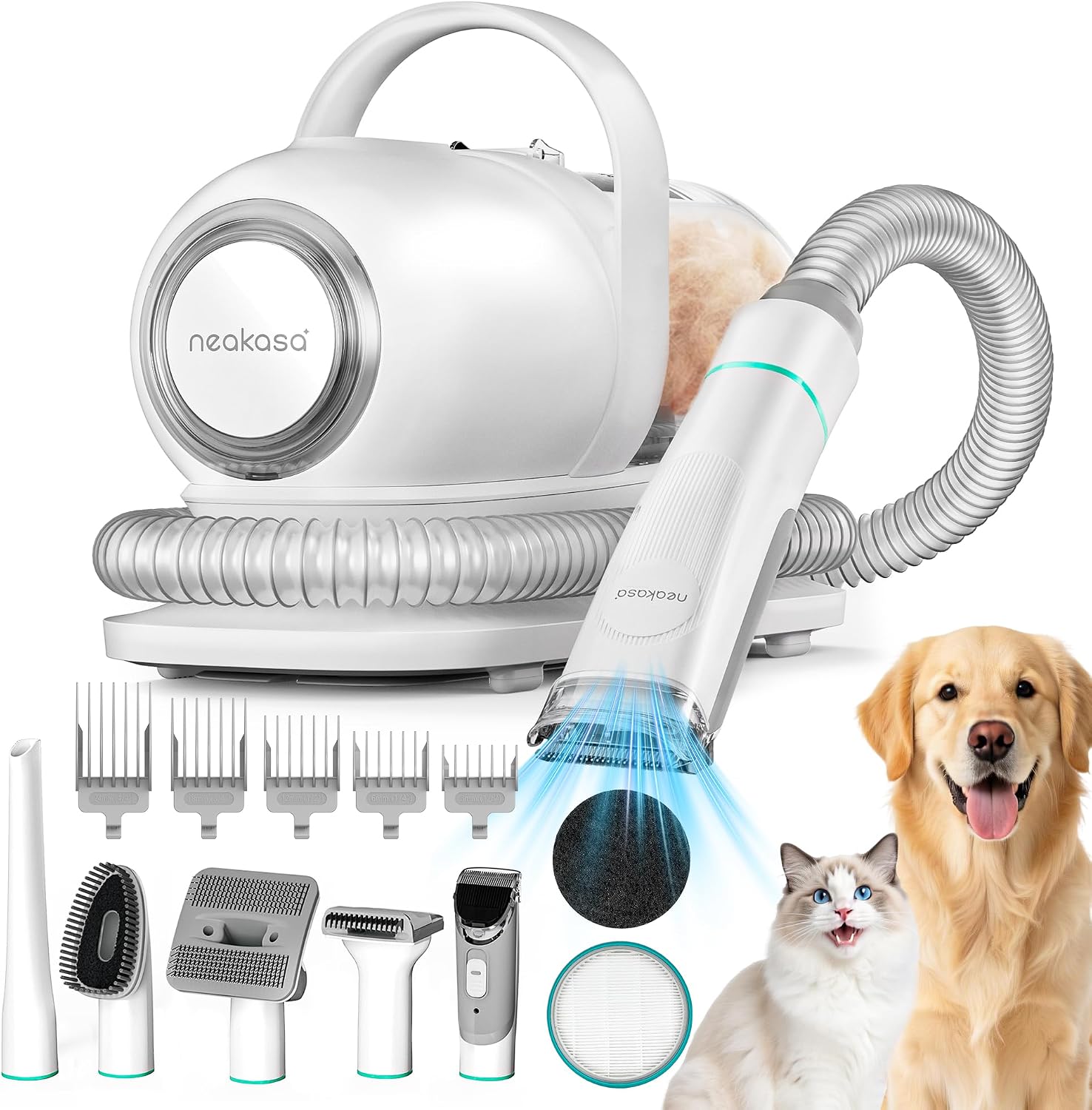
The Neakasa P1 Pro is a five-in-one grooming vacuum designed for routine brushing, deshedding, trimming, and collecting hair.
It includes grooming and rake attachments, electric clippers, and cleaning tools.
Its published specifications include:
- 9,000 Pa advertised suction
- 1-liter dust container
- 1.3-meter hose
- Adjustable suction
- Manufacturer-reported operating noise ranging from approximately 52 to 75 dB
This is the type of machine that may appeal to owners with one dog who want to keep loose fur contained while brushing indoors.
Its main limitation is the relatively small one-liter collection container.
If you have a large, heavily shedding dog, you may need to empty it during a grooming session.
Oneisall Cozy SE2: More capacity for heavy shedding
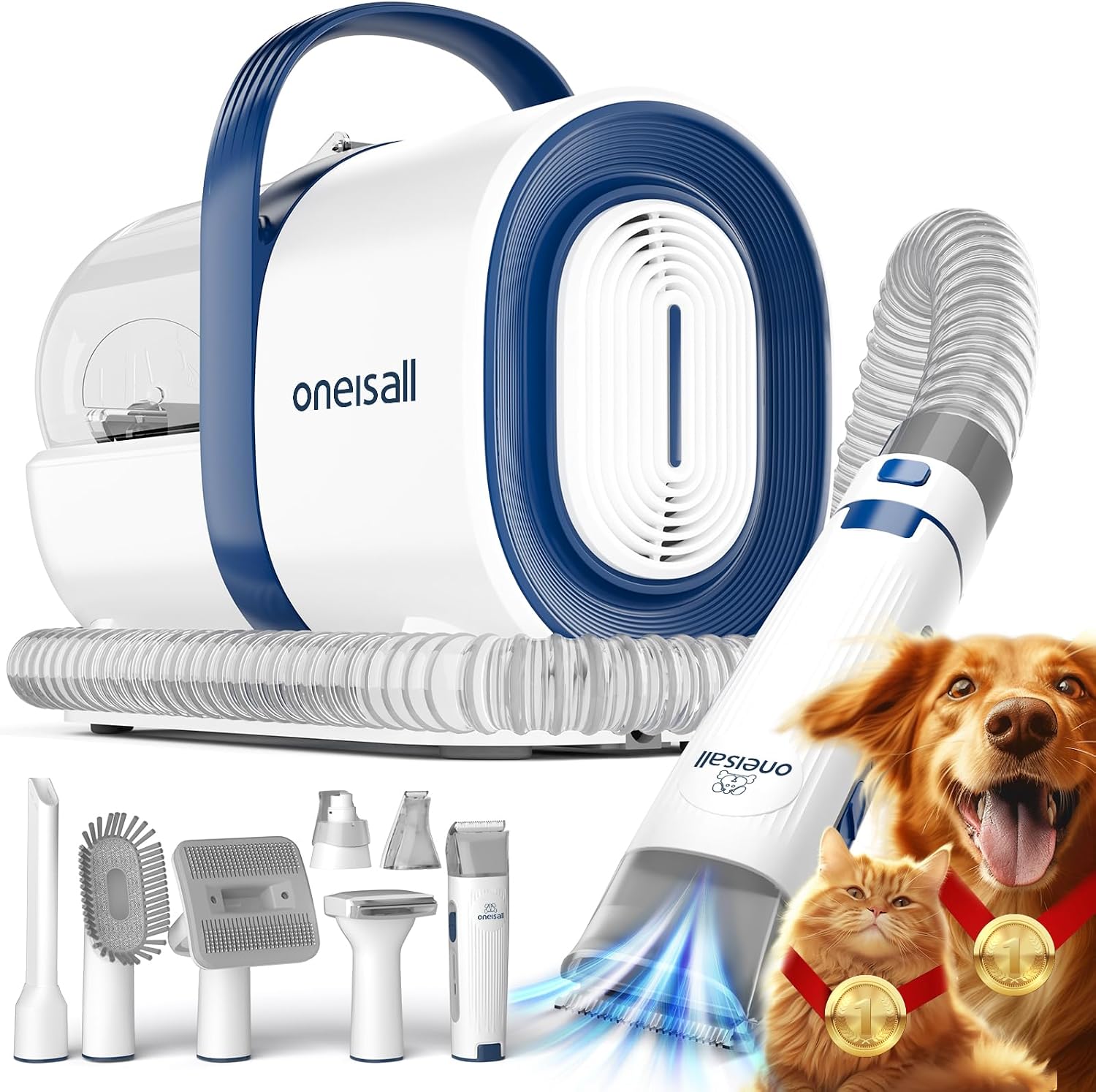
The Oneisall Cozy SE2 is another dedicated grooming vacuum, with a larger two-liter container and several grooming attachments.
The manufacturer advertises suction up to 15,000 Pa and a relatively quiet operating mode.
Its attachments include grooming and deshedding tools, electric clippers, and cleaning accessories.
A larger dustbin can be convenient if you regularly groom a long-haired dog or have multiple pets.
However, don’t assume the higher advertised suction number automatically makes it better.
Suction specifications are not always measured using identical test methods across manufacturers. Attachment design, comfort, noise, and the dog’s coat type may matter more.
Do you need either one?
Not necessarily.
If you already own a compatible household vacuum with a manufacturer-approved pet grooming attachment, you may be able to achieve similar hair collection without purchasing another motorized device.
And if your dog sheds lightly, an ordinary brush and regular household vacuum may be more economical.
We would prioritize purchasing a grooming vacuum when managing shedding has become a recurring, time-consuming household chore.
8. Grooming Vacuum vs Regular Vacuum: Cost and Convenience
A grooming vacuum is an additional purchase unless you already own a compatible attachment.
But the price of the machine isn’t the only consideration.
Think about how often you groom, how much hair you collect, and whether the machine genuinely makes the process easier.
Ownership factor | Grooming vacuum | Regular vacuum and brush |
|---|---|---|
Additional purchase | Usually needed | May already own both |
Captures hair during brushing | Yes | Only with appropriate attachment |
Floor and carpet cleaning | Limited | Better suited |
Grooming-specific accessories | Usually included | Usually separate |
Additional storage space | Required | Often none |
Filter and bin maintenance | Additional machine to maintain | Existing vacuum maintenance |
Heavy-shedding convenience | Often better | More cleanup after brushing |
Best value for light shedding | Often unnecessary | Usually better |
For example, suppose you brush your dog three times per week.
Without a grooming vacuum, each session may involve brushing, collecting piles of fur, and cleaning the floor afterward.
A grooming vacuum could reduce the cleanup portion of that routine.
However, the amount of time saved varies. You’ll still need to empty the collection container, clean attachments, and occasionally maintain the filter.
The best financial argument for a grooming vacuum is usually convenience, not guaranteed savings from fewer professional grooming appointments.
A grooming vacuum doesn’t replace bathing, nail trimming, ear care, or professional coat maintenance when those services are necessary.
9. When You Should Skip a Dog Grooming Vacuum
There are several situations where buying a dedicated grooming vacuum may not be worthwhile.
Your dog is frightened by vacuum noise. If gradual introduction doesn’t help, conventional grooming is a better option.
Your dog sheds very little. A simple grooming brush may provide everything you need without an additional appliance.
You already own a compatible pet-grooming attachment. An existing vacuum may be adequate for collecting loosened hair.
Your dog’s coat requires specialized grooming. Curly, tightly matted, or delicate coats may need techniques that ordinary vacuum grooming kits don’t provide.
You’re mainly trying to clean furniture and carpet. A dedicated household vacuum with effective upholstery tools is generally better for that job.
You expect the machine to stop shedding completely. A grooming vacuum removes loose hair; it doesn’t prevent the normal shedding process.
10. Which Option Is Best for Your Dog?
Your situation | Our recommendation |
|---|---|
Golden Retriever or German Shepherd with heavy shedding | Dedicated grooming vacuum |
Short-haired dog with moderate shedding | Regular brush and household vacuum |
Dog already comfortable with a compatible Dyson grooming tool | Use the approved attachment |
Nervous dog frightened by motors | Conventional brush, gradual training if desired |
Multiple long-haired pets | Grooming vacuum with larger dustbin |
Dog with severe mats | Professional groomer |
Mainly cleaning hair from couches and carpets | Regular vacuum |
Want less loose hair during indoor brushing | Grooming vacuum |
For most owners with a heavy-shedding dog, the largest benefit is collecting hair before it spreads through the room.
However, that convenience only matters if your dog remains comfortable and you use the correct grooming tools.
Frequently Asked Questions
Can I vacuum my dog with a regular vacuum?
Don’t use an ordinary household vacuum nozzle directly on your dog’s skin or coat. If your vacuum manufacturer offers a compatible pet grooming attachment, you may be able to use it according to the manufacturer’s instructions. Otherwise, use an appropriate grooming brush and vacuum the loose hair afterward.
Do dog grooming vacuums really work?
Yes, they can collect loose hair while you brush, reducing the amount that falls around your home during grooming. However, they don’t stop natural shedding, replace appropriate brushes, or guarantee reduced household vacuuming.
Is a grooming vacuum better for dogs that shed a lot?
It can be particularly useful for heavy-shedding dogs because more loose fur is available to collect during brushing. The benefit depends on the coat type, attachment, grooming technique, and the dog’s comfort with the machine.
Can a grooming vacuum remove a dog’s undercoat?
A suitable deshedding attachment can help remove loose undercoat hair. However, aggressive grooming can damage the coat or irritate the skin. Use coat-appropriate tools and avoid overbrushing.
Are grooming vacuums safe for puppies?
Puppies may be more sensitive to handling and unfamiliar sounds, and their coats can require different tools from adult dogs. Introduce grooming gently and consult a qualified groomer or veterinarian before using vacuum-powered attachments on a young puppy.
Is a dog grooming vacuum quieter than a regular vacuum?
Some grooming vacuums advertise comparatively low noise levels, especially on their lowest settings. However, noise specifications vary by model and measurement conditions. A quieter motor doesn’t guarantee that a nervous dog will tolerate the machine.
Can a grooming vacuum replace professional grooming?
No. It can help with routine brushing, loose-hair collection, and some maintenance tasks, but it doesn’t replace professional services when a dog needs complex trimming, mat removal, or other specialized coat care.
Can a grooming vacuum be used on wet fur?
Most standard grooming vacuums are designed for dry-coat grooming, not drying a wet dog. Don’t use one on wet fur unless the manufacturer explicitly supports that function. A grooming vacuum and a pet dryer are different tools.
How often should I use a grooming vacuum on my dog?
Use it according to your dog’s coat type and grooming needs rather than following one universal schedule. Some dogs benefit from weekly brushing, while dense double coats may require more frequent care during seasonal shedding. Watch for skin irritation or signs of overbrushing.
Is a dog grooming vacuum worth it if I already have a good vacuum?
It may be worthwhile if you spend considerable time collecting loose hair during indoor grooming. However, if you already have suitable grooming brushes and don’t mind vacuuming afterward, a dedicated grooming vacuum may offer little additional value.
Final Verdict: Dog Grooming Vacuum vs Regular Vacuum
For owners who regularly deal with heavy shedding, a dedicated dog grooming vacuum can be a worthwhile addition to their grooming routine.
Its biggest advantage is collecting loose hair while brushing, before that fur ends up on clothing, furniture, and floors.
Models such as the Neakasa P1 Pro and Oneisall Cozy SE2 offer purpose-built brushes, hair-collection containers, and grooming attachments that ordinary household vacuums typically don’t include.
However, that doesn’t make them essential for every dog owner.
A regular vacuum remains the better tool for cleaning carpets and upholstery. And when paired with appropriate conventional brushing, it may be all that’s needed for dogs with lighter shedding.
If you already own a compatible manufacturer-approved pet grooming attachment, consider using it before buying a separate machine.
Ultimately, the best choice depends on your dog’s coat, comfort, and how much time you spend cleaning up after grooming.
Choose a grooming vacuum if you want less mess during brushing. Keep using your regular vacuum if your main problem is hair that’s already around the house.
And whichever approach you choose, remember that proper brushing technique and your dog’s comfort matter more than a machine’s suction rating.
Sources and Research Methodology
This article draws on established grooming guidance and manufacturer product documentation. It does not claim independent hands-on product testing by PetsPal.
- American Society for the Prevention of Cruelty to Animals (ASPCA): Dog Grooming Tips — https://www.aspca.org/pet-care/dog-care/dog-grooming-tips
- American Kennel Club: Dog Brushes and Coat Care — https://www.akc.org/expert-advice/health/types-dog-brushes-shedding/
- American Kennel Club: Double-Coated Dog Breeds and Shedding — https://www.akc.org/expert-advice/dog-breeds/double-coated-dog-breeds/
- Dyson: Pet Grooming Kit and Compatibility — https://www.dyson.com/support/journey/tools/972205-01
- Neakasa: P1 Pro Grooming Vacuum — https://neakasa.com/products/neakasa-p1-pro-pet-grooming-vacuum
- Oneisall: Cozy SE2 Grooming Vacuum — https://oneisall.com/products/oneisall-pg08-6-in-1-dog-grooming-vacuum-kit
Product specifications, accessories, prices, and availability can change. Always check compatibility before purchasing.